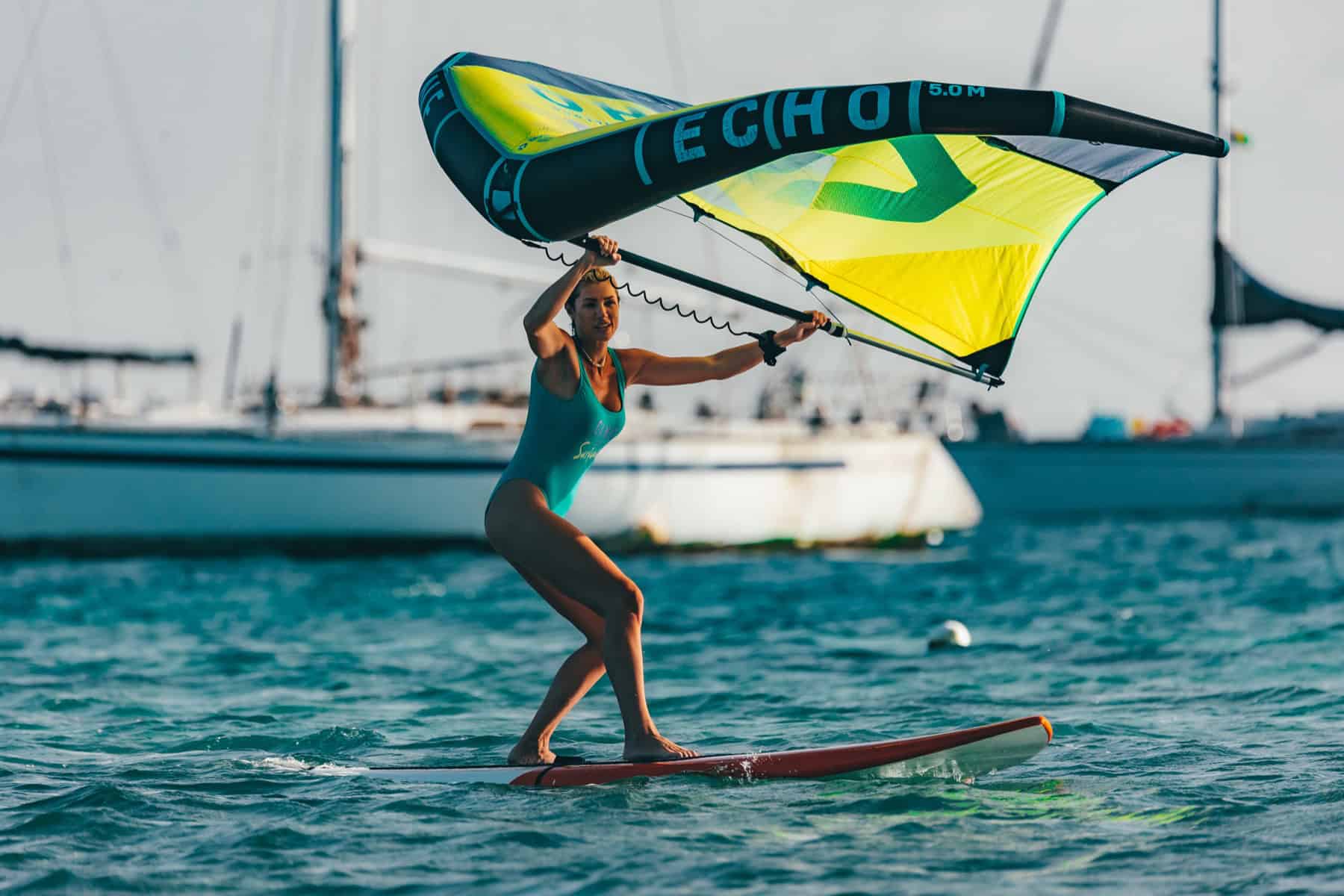
Beginner wing foiling guide
How Long Does It Take to Learn Wing Foiling?
Wing foiling can be easy at the start and difficult once the foil begins. Jeremie Tronet explains the real learning curve, from beach practice to first flights.
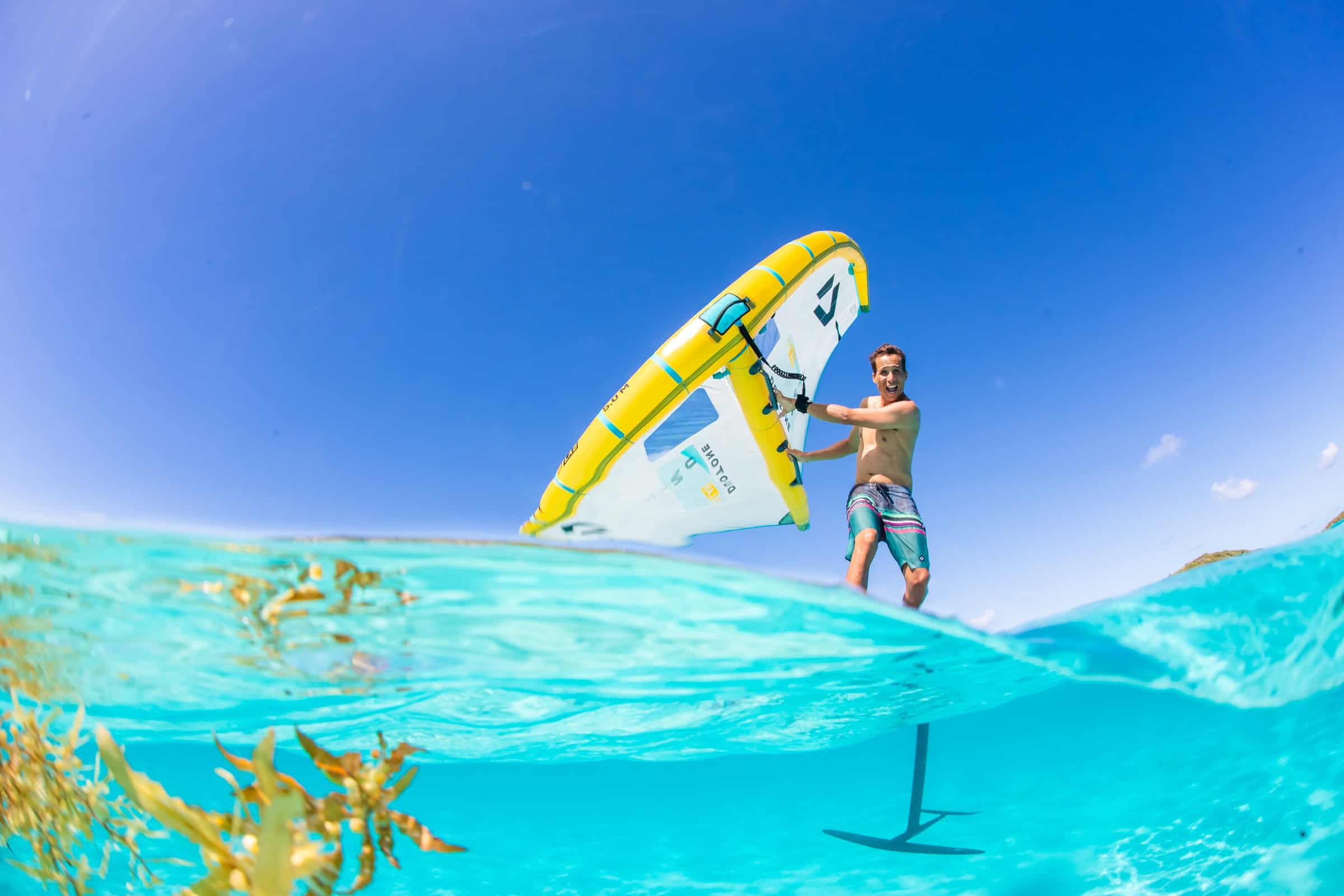
With the new popularity of wing foiling, a lot of people have decided to learn this new amazing sport.
Wing foiling gives you some abilities that you do not really get with kitesurfing. You can practice in locations where you would not be able to kitesurf because you do not need a large area to set up.
But learning how to wing foil is not just one thing.
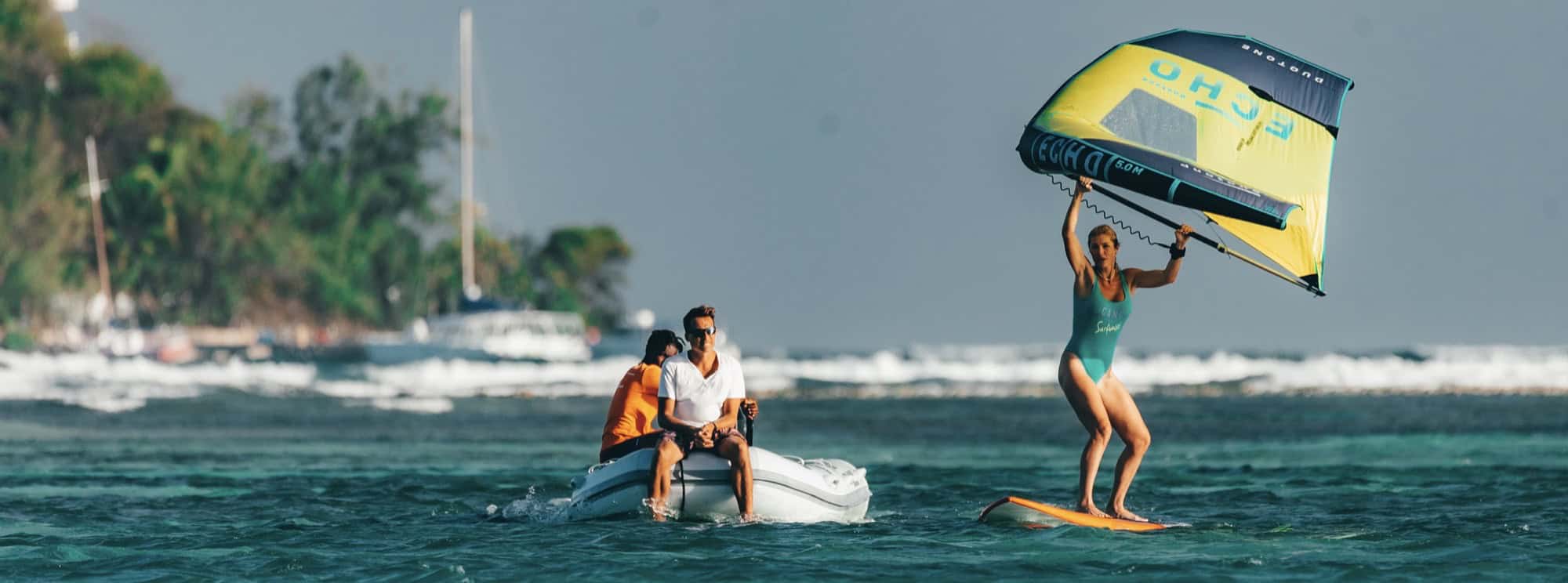
The easy part is learning how to use the wing on the beach or on a large SUP board.
The hard part is learning to ride on the foil.
This is where a lot of beginners get surprised.
Riding on a foil board is something entirely new. Most board sport experience does not help as much as people think because the foil balance is different.
If you have previous e-foil experience, this can help. But wing foiling is still its own sport.
Quick Answer
| Stage | Typical timing | What it means |
|---|---|---|
| Learning to handle the wing on the beach | Around 15 to 30 minutes | You learn how to hold the wing, create power, walk with it, and understand the basic wind direction. |
| Riding with the wing on a large SUP board | Often 2 to 3 hours | You can start going back and forth on the water and practice controlling the wing. |
| First flights on the foil | Often after 2 to 3 two-hour lessons | You start getting up on the foil and feeling your first real flights. |
| Riding back and forth on the foil | Often 3 to 5 days | You can start flying more comfortably and riding both ways. |
| Practicing on your own | After a few lessons for many people | You can continue practicing, but boat support, the right conditions, and the right equipment make a big difference. |
| Learning completely on your own | Often 8 to 10 sessions or more | It can take much longer because you spend more time swimming, drifting, walking back, and trying to understand the foil without help. |
The simple answer is that you can start having fun on a large board in one lesson. Getting your first flights on the foil usually takes two to three two-hour lessons. Riding back and forth on the foil and becoming close to independent usually takes around three to five days with a good wing foil school. Practicing completely on your own can take a lot longer.
Want to Learn Wing Foiling in the Caribbean?
Tell us your level, your travel dates, and if you have any previous board sport or e-foil experience. We will help you choose the right wing foil lesson plan for Union Island conditions.
Why So Many People Want to Learn Wing Foiling
With the new popularity of wing foiling, a lot of people have decided to learn this sport because it is easier to access than kitesurfing.
You do not need a big beach to set up long kite lines.
You do not need someone to launch a kite.
You do not need the same amount of space.
This is one of the big reasons wing foiling has become so popular.
Learning to wing foil will allow you to practice a very fun water sport in locations where you would not be able to do kitesurfing.
For sailors, it is also a very interesting sport because starting from a boat with a kite can be very tricky. With wing foiling, the setup is much simpler.
But simple setup does not mean the sport is easy all the way through.
The learning curve comes down to a few things:
- how fast you want to learn
- whether you take lessons or try alone
- if you have boat support
- if you use the right equipment
- how comfortable you are in the water
- how much time you spend on the foil
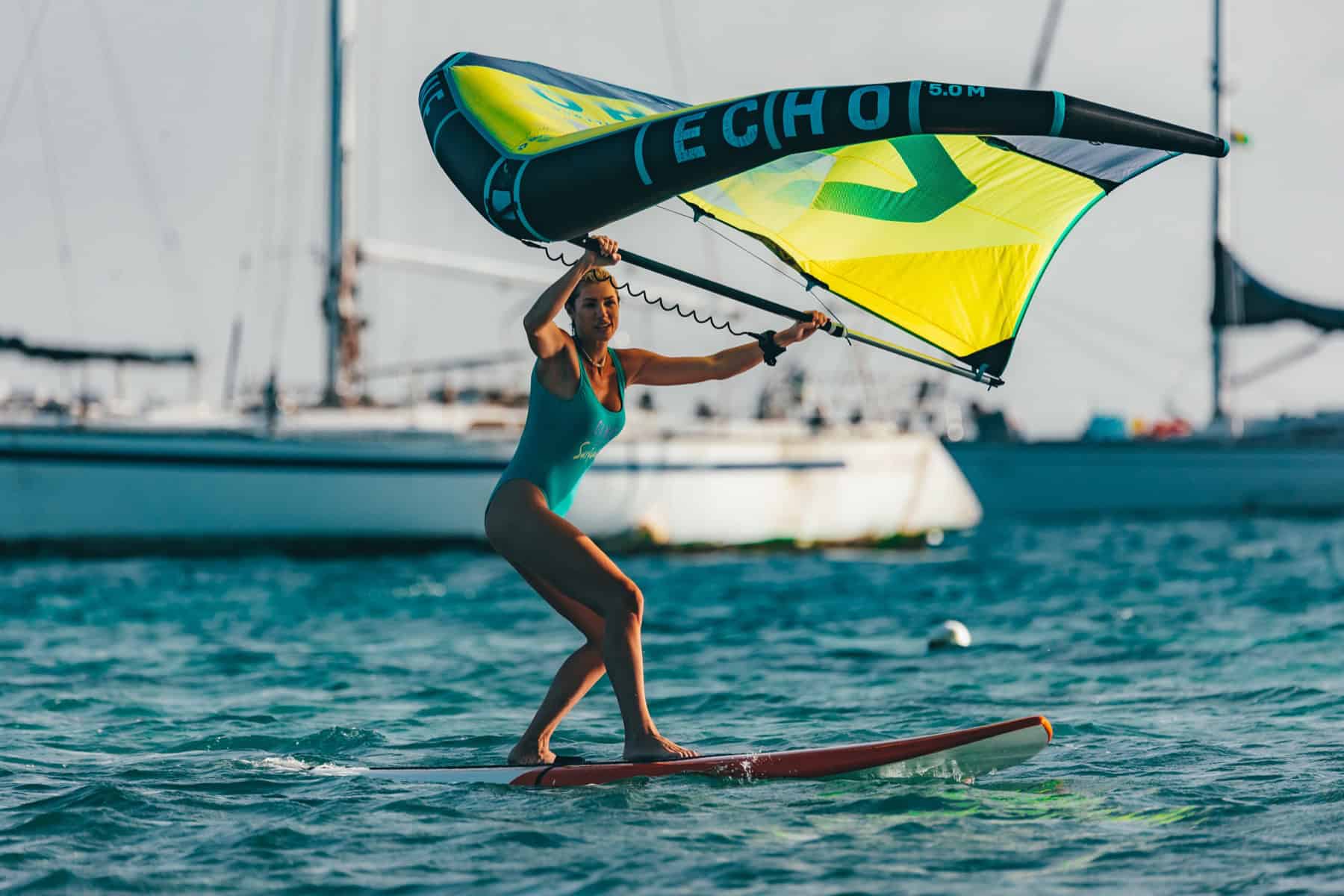
Learning Wing Foiling Has Two Main Parts
Learning how to wing foil is divided into two main parts.
The first part is learning how to use the wing.
The second part is learning how to fly on the foil.
A lot of people mix both together, but they are very different.
Part One: Learning the Wing
The first thing to learn is how to control the wing.
We suggest doing that on the beach first.
It usually takes around 15 to 30 minutes to practice walking on the beach and piloting the wing.
You learn how the wing creates power, how to change direction, and how to keep control in the wind.
This part is not very hard for most people.
Part Two: Riding on a Large SUP Board
The next step is to go on the water with a large SUP board.
We suggest using a center fin if possible. Some brands have add-ons for this, and an old windsurf board with a strong center fin can also work.
It is very important to have a lot of volume in the board. The extra volume gives you balance and makes it much easier to learn.
Just doing this can already allow you to go back and forth on the board and practice maneuvering the wing.
This can be done for a couple of hours, and it is very good practice.
For many beginners, after two to three hours, they can already ride back and forth on the SUP board and practice with the wing.
Part Three: Learning to Fly on the Foil
The hard part becomes the foil.
This is the second big part of learning wing foiling.
Flying on the foil means the board lifts above the water. This is the amazing feeling everyone wants, but it is also the part that takes more time.
Learning to fly on the foil can take two to three days of lessons before you start getting your first flights.
Some people get it faster. Some people need longer.
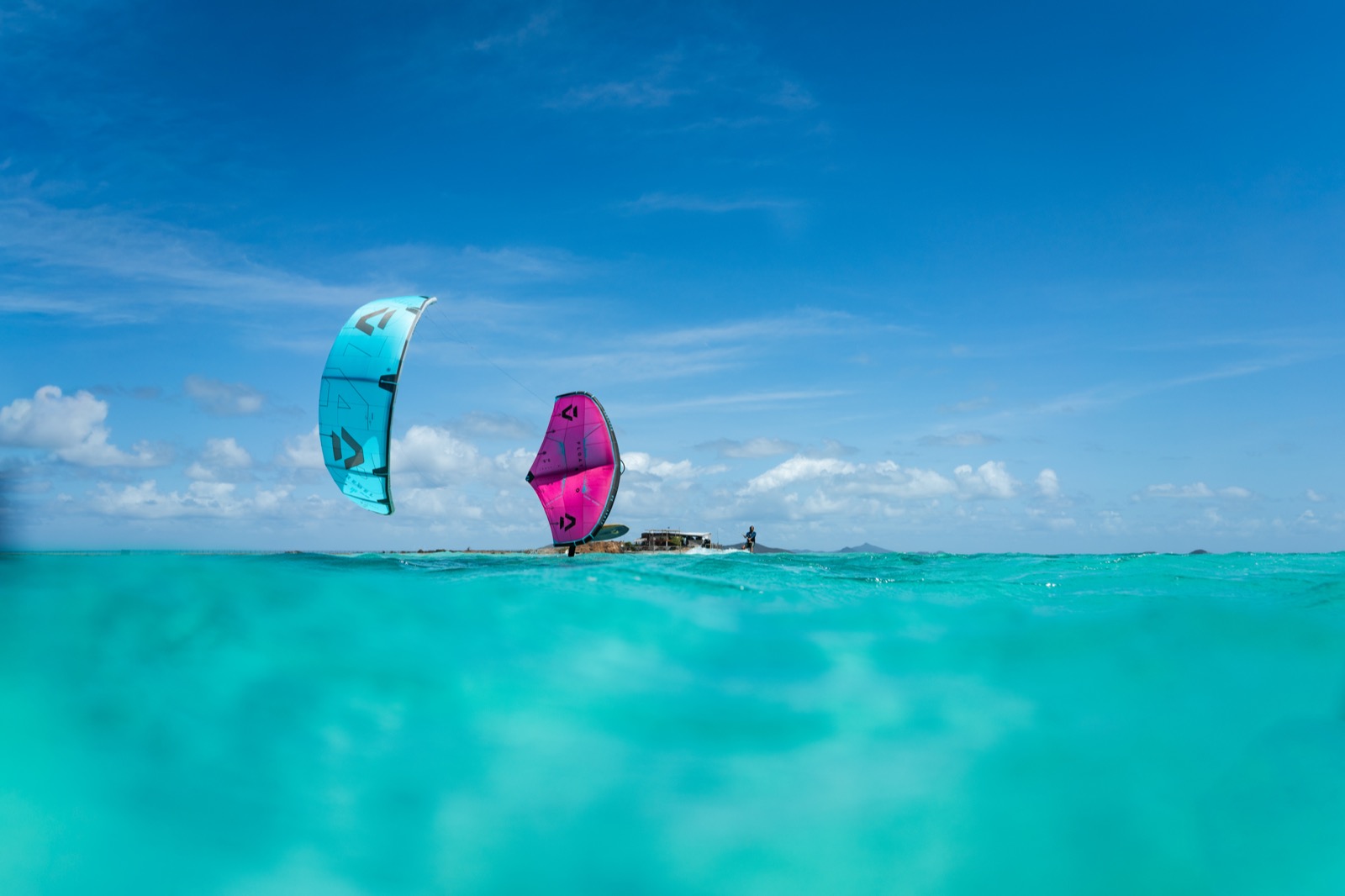
Why the Foil Is the Hard Part
Learning to fly on the foil is where the instructor’s tips become very important.
Foiling can be very technical and takes a lot of falls before you get it right.
But everybody can get it if they keep practicing.
After a few hours, you will usually start flying for short moments.
We suggest that between two to three two-hour lessons, many people can start having their first flights on the foil.
It can take longer for people with less balance or less water confidence.
The reason is simple: the foil balance is different from normal board sports.
Surfing, wakeboarding, snowboarding, and other board sports can help your general balance, but they do not teach your body how to control the foil.
The foil reacts differently. You have to learn how much front foot pressure and back foot pressure to use. You have to learn how to control the height. You also have to control the wing at the same time.
That is why wing foiling looks easy when someone is good, but feels very difficult at the beginning.
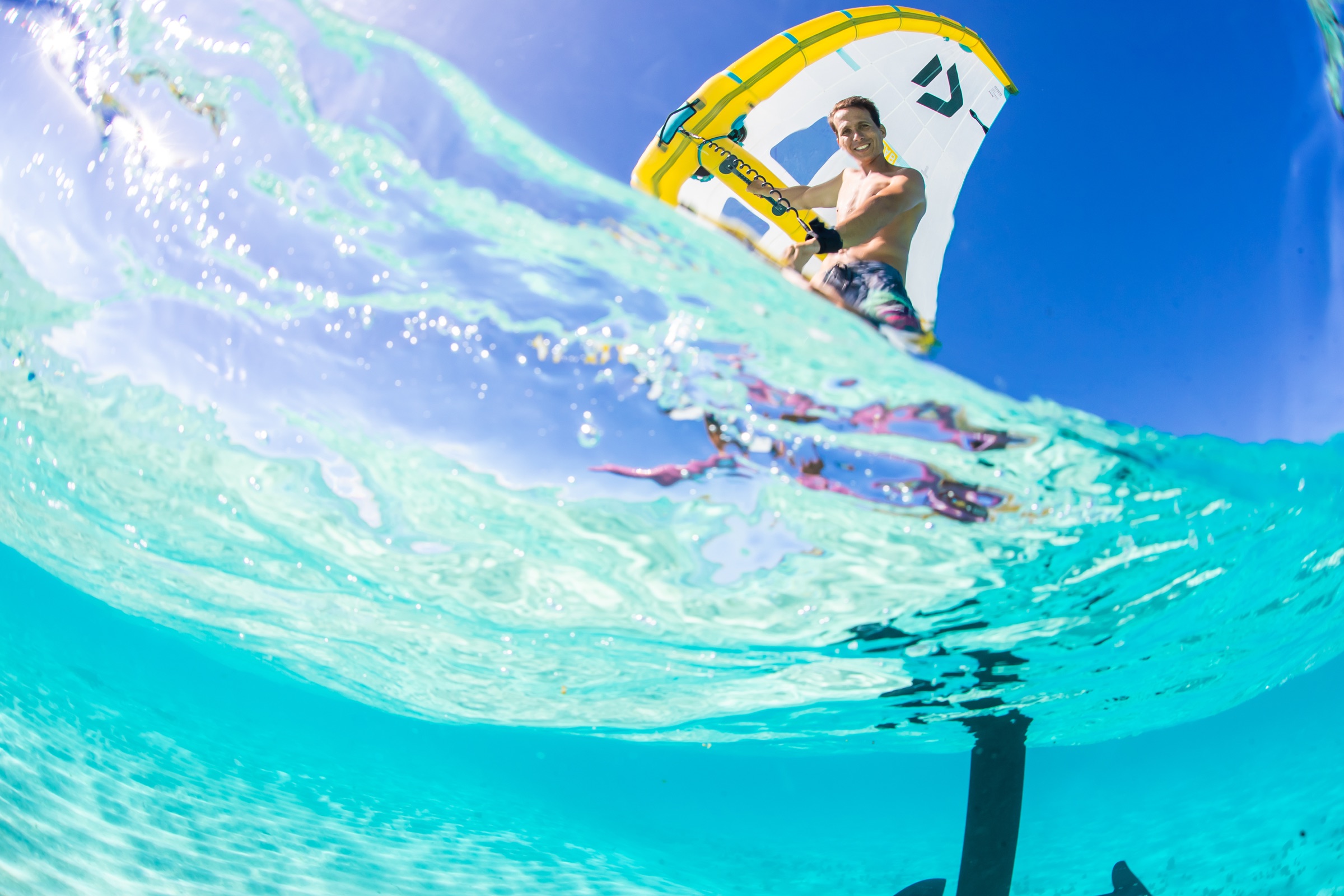
Does E-Foiling Help You Learn Wing Foiling?
If you have previous e-foil experience, this will help.
E-foiling helps you understand the feeling of flying above the water and how the foil reacts.
But learning to wing foil is still an entirely new sport.
With e-foiling, the motor gives you consistent power.
With wing foiling, you need to control the wing, generate power from the wind, balance on the board, and manage the foil all at the same time.
So yes, e-foiling helps.
But do not think that because you know how to e-foil, wing foiling will automatically be easy.
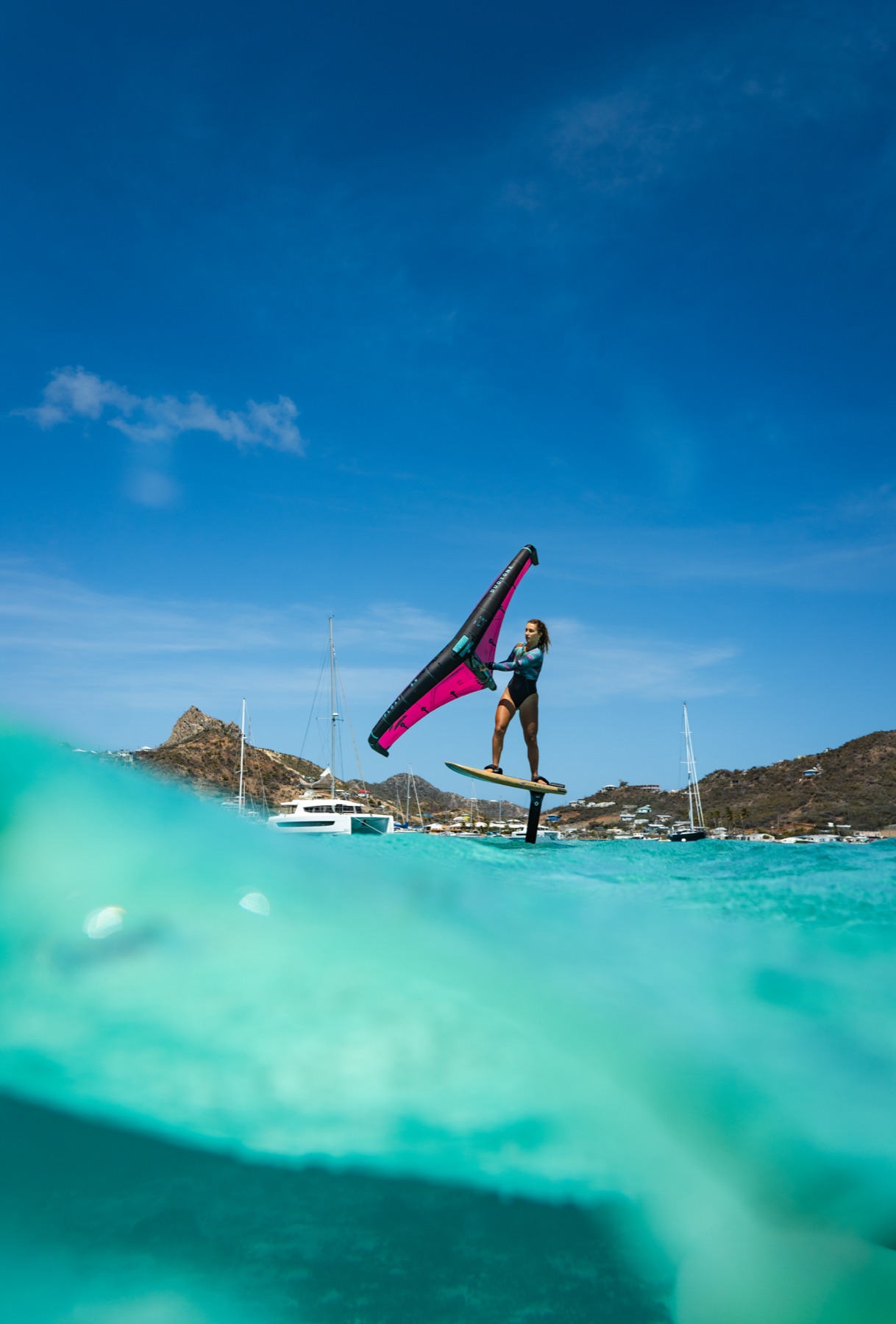
How Many Lessons Do You Need to Learn Wing Foiling?
For most people, one lesson is enough to understand the wing and start riding on a large SUP board.
To get your first flights on the foil, we usually suggest two to three two-hour lessons.
To start riding properly, going back and forth, and becoming close to independent, three to five days is a realistic target.
Some people get it after two days.
Some people get it after five days.
Some people need more.
It depends on your balance, your confidence, the wind, the water conditions, and especially the equipment and support you are using.
Why the Right Board and Foil Size Matter
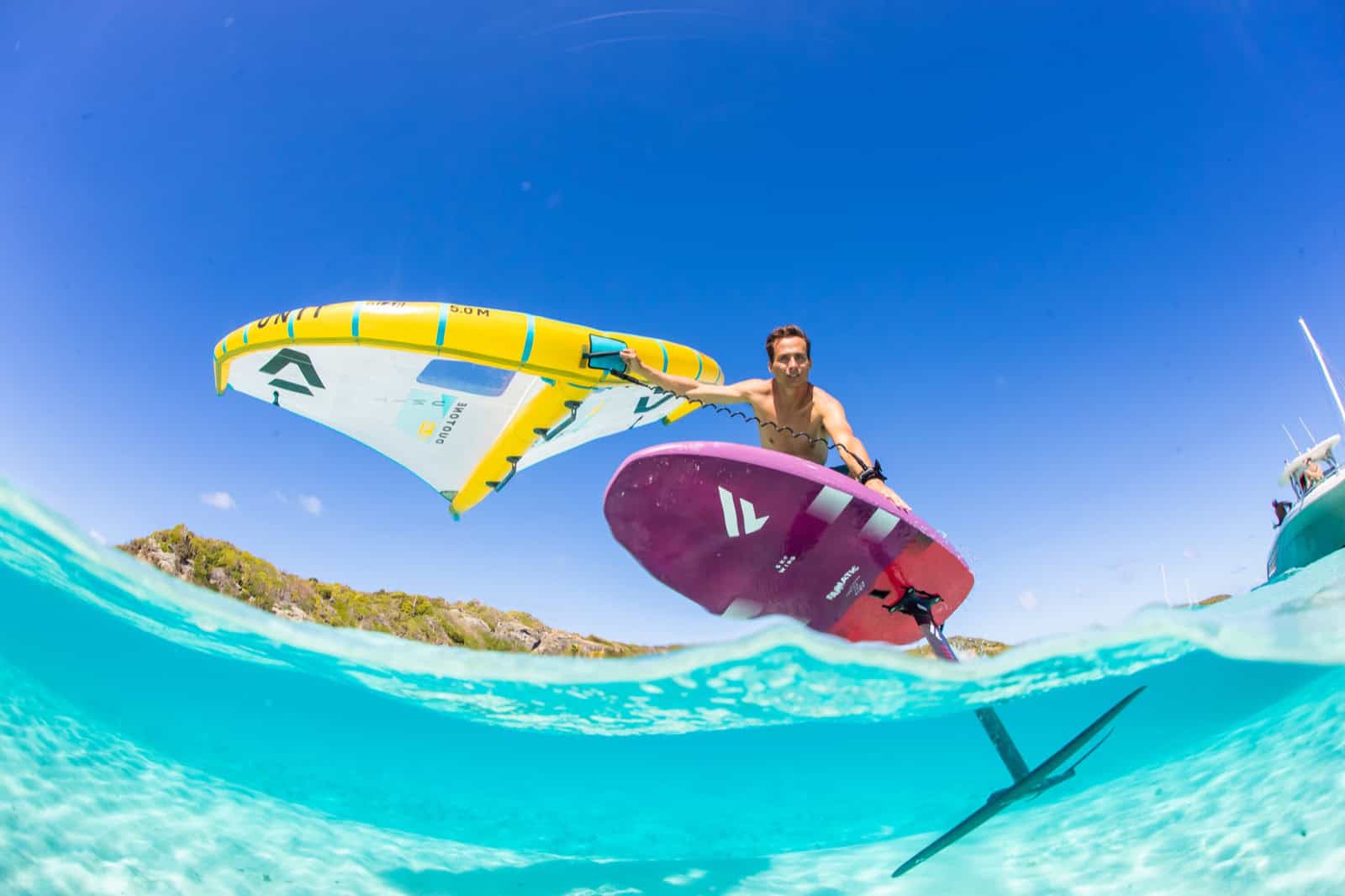
It is very important to use a very large wing foil board when you are learning.
Learning on a small board is extremely difficult.
A large board gives you the balance and stability you need in the beginning.
The foil size is also important.
A large beginner foil, around 1,800 to 2,500 cm² for the front wing, can help a lot when learning how to wing foil.
A smaller foil is much more unstable and can make everything harder.
This is one of the main reasons it is better to learn with a wing foil school.
You do not want to buy a very large beginner board for your first rides because you will outgrow it fast. It is also cumbersome and heavy to carry around.
It is better to use a big board from the school, learn the basics, and then choose your own equipment after you understand what you need.
Why a Wing Foil School Saves You Time
Taking a few lessons will help you tremendously.
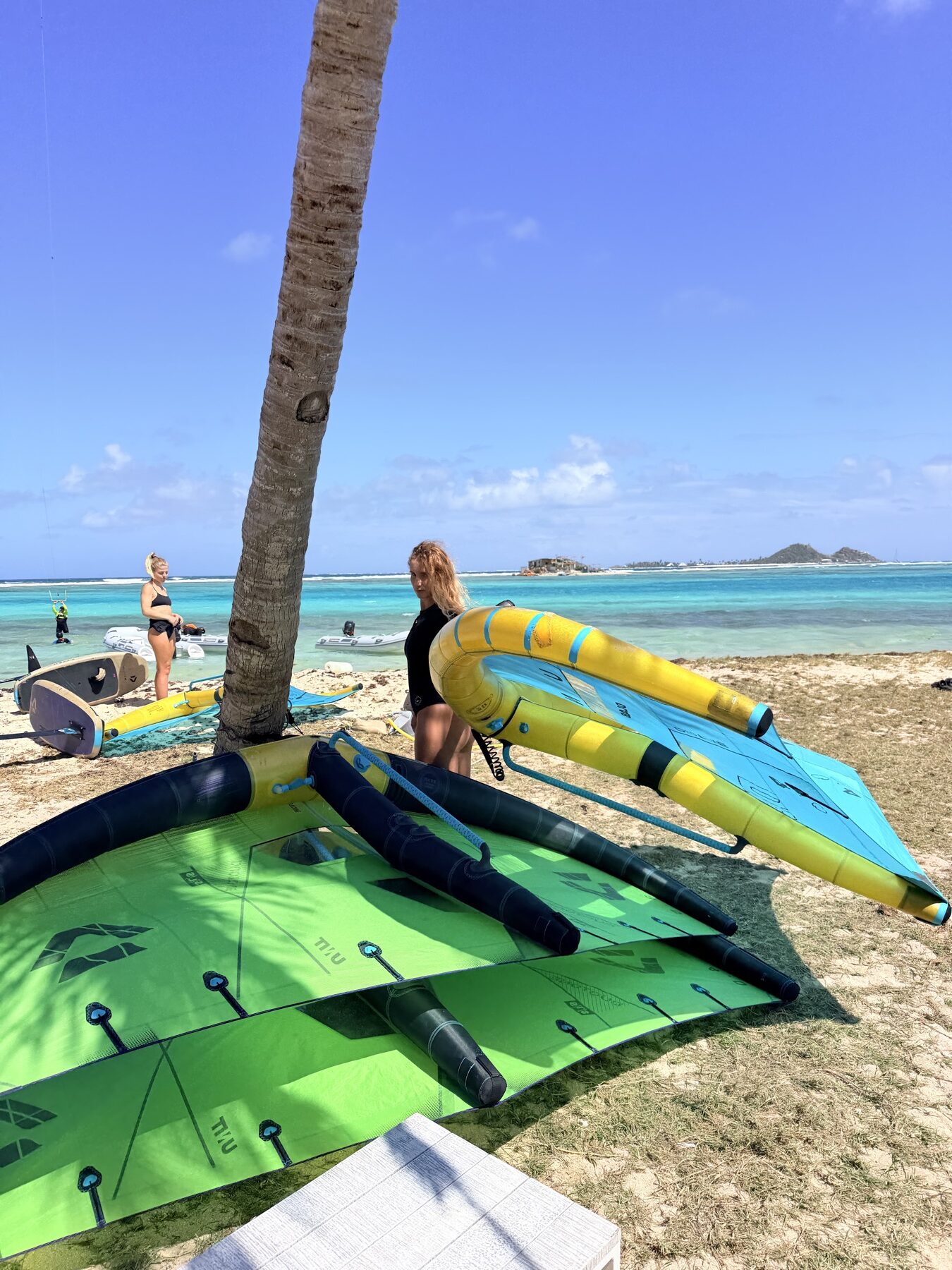
Learning with a wing foil school gives you:
- the right board
- the right foil
- the right wing size
- instructor tips
- radio-assisted coaching when useful
- boat support
- less walking back
- less swimming
- less wasted time
We do not recommend practicing on your own if you do not have a beach with side-shore wind.
The problem is that you can end up drifting downwind a lot. Then you have to walk back with heavy equipment along the beach.
This is one of the big downsides of learning on your own.
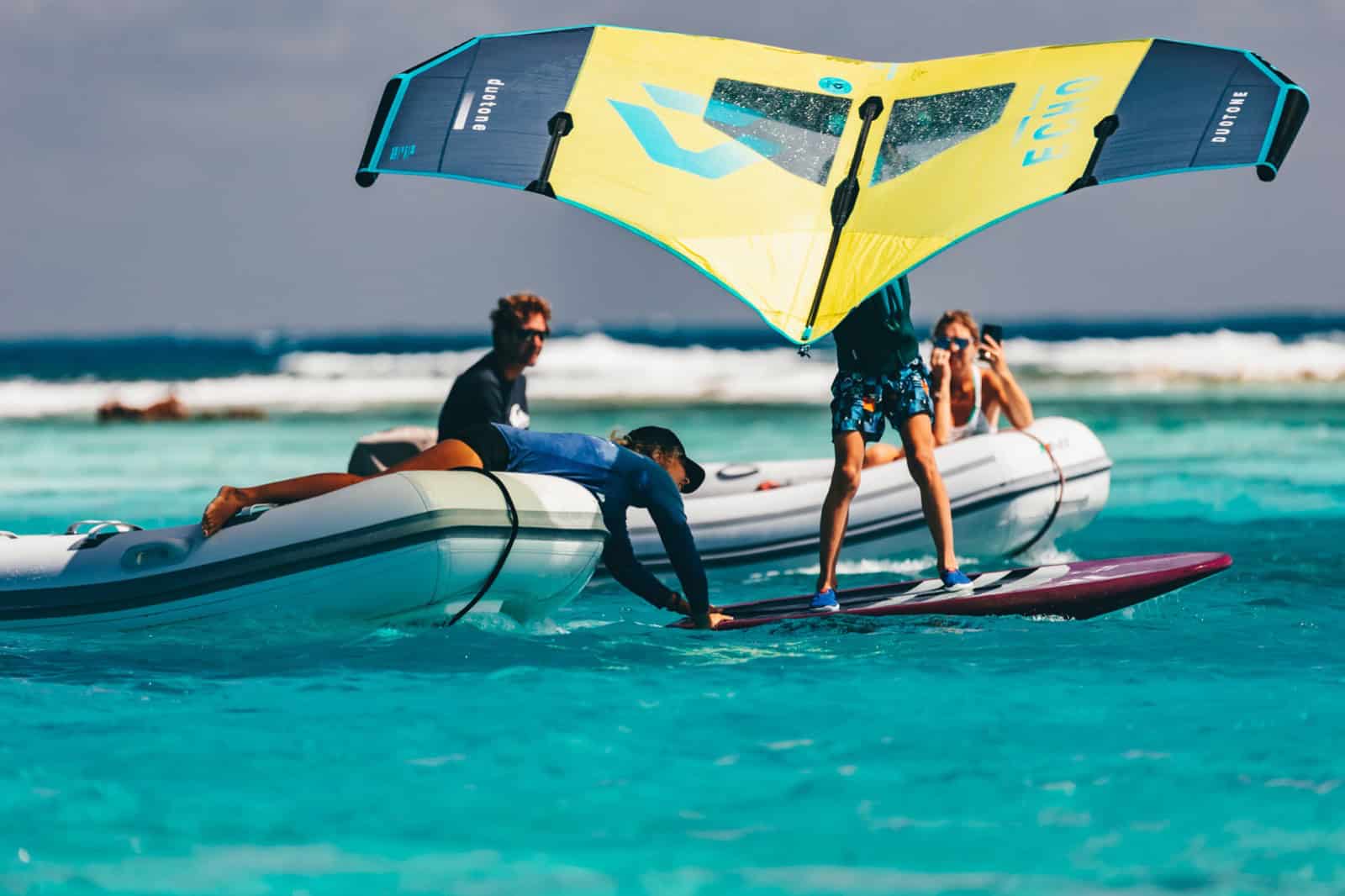
Learning with a wing foil school allows you to have a boat following you.
If you are choosing a wing foil school, make sure they have boat support or radio-assisted coaching.
At JT Pro Center, we teach with a large beginner board, a dinghy following you, and radio-assisted coaching when useful.
This helps you get more real practice time instead of spending the lesson drifting, swimming, or walking back.
Learn Wing Foiling in the Caribbean
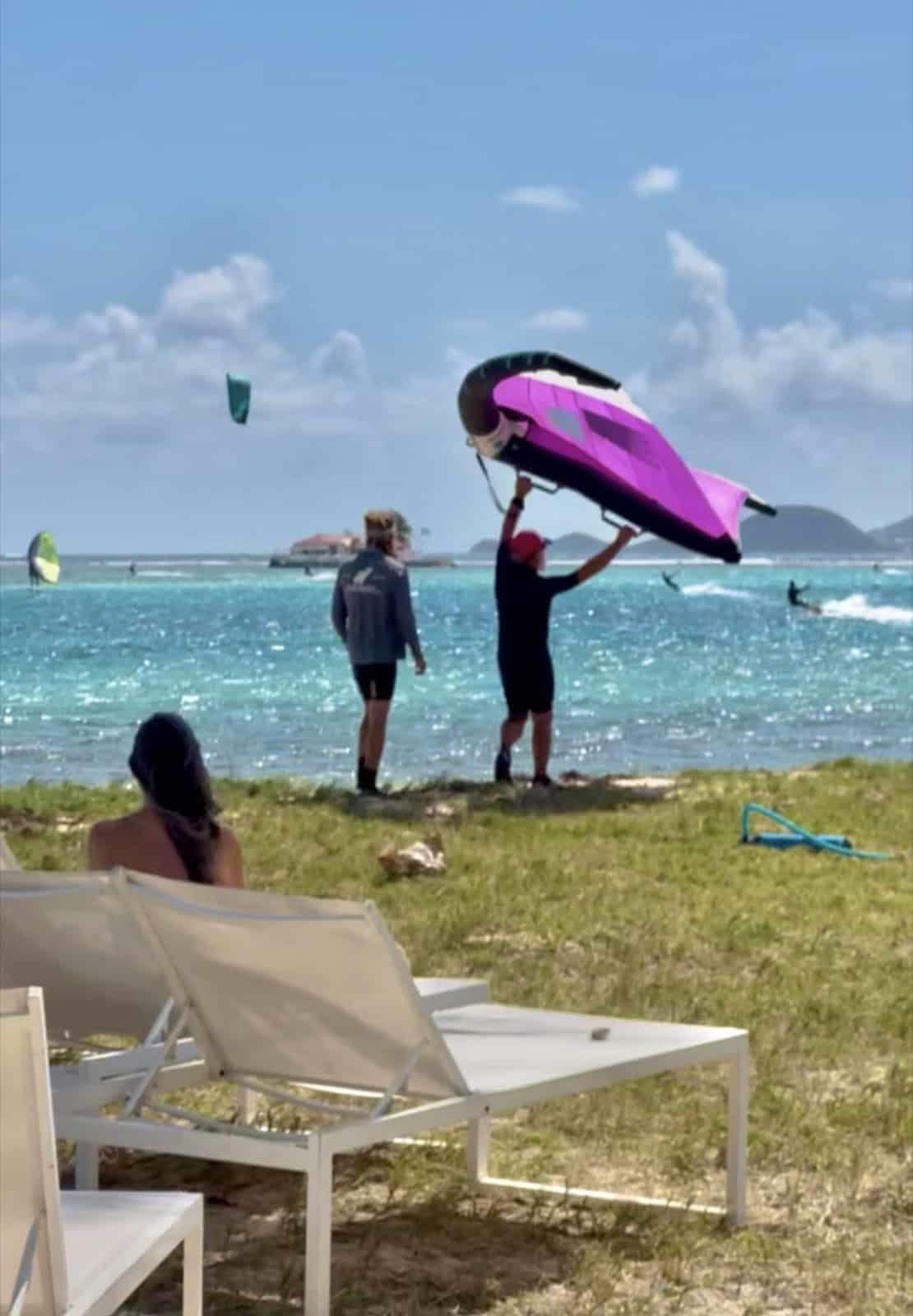
Private wing foil lessons with large beginner boards, radio-assisted coaching when useful, and boat support on Union Island.
View Wing Foil LessonsNot Sure Between Wing Foiling and Kitesurfing?
If you are choosing between both sports, compare the setup, learning curve, independence, and feeling before deciding which one to start first.
Compare Both SportsCan You Learn Wing Foiling on Your Own?
You can learn part of wing foiling on your own.
Learning to use the wing and riding on a SUP board can be done on your own if you have the right location.
You can get a SUP board, a wing, watch a few tutorials online, and learn how to go back and forth.
But when it comes to learning the foil, taking lessons makes a huge difference.
Practicing on your own can take much longer.
You may need eight to ten times on the water, sometimes more, with a lot more swimming, more walking, and more frustration.
You also do not have the right tips on how to control the foil properly.
If you have a boat available, getting towed by the boat can be a good way to practice foiling as well.
But for most people, learning with a wing foil school will save a lot of time.
When Do You Become Independent?
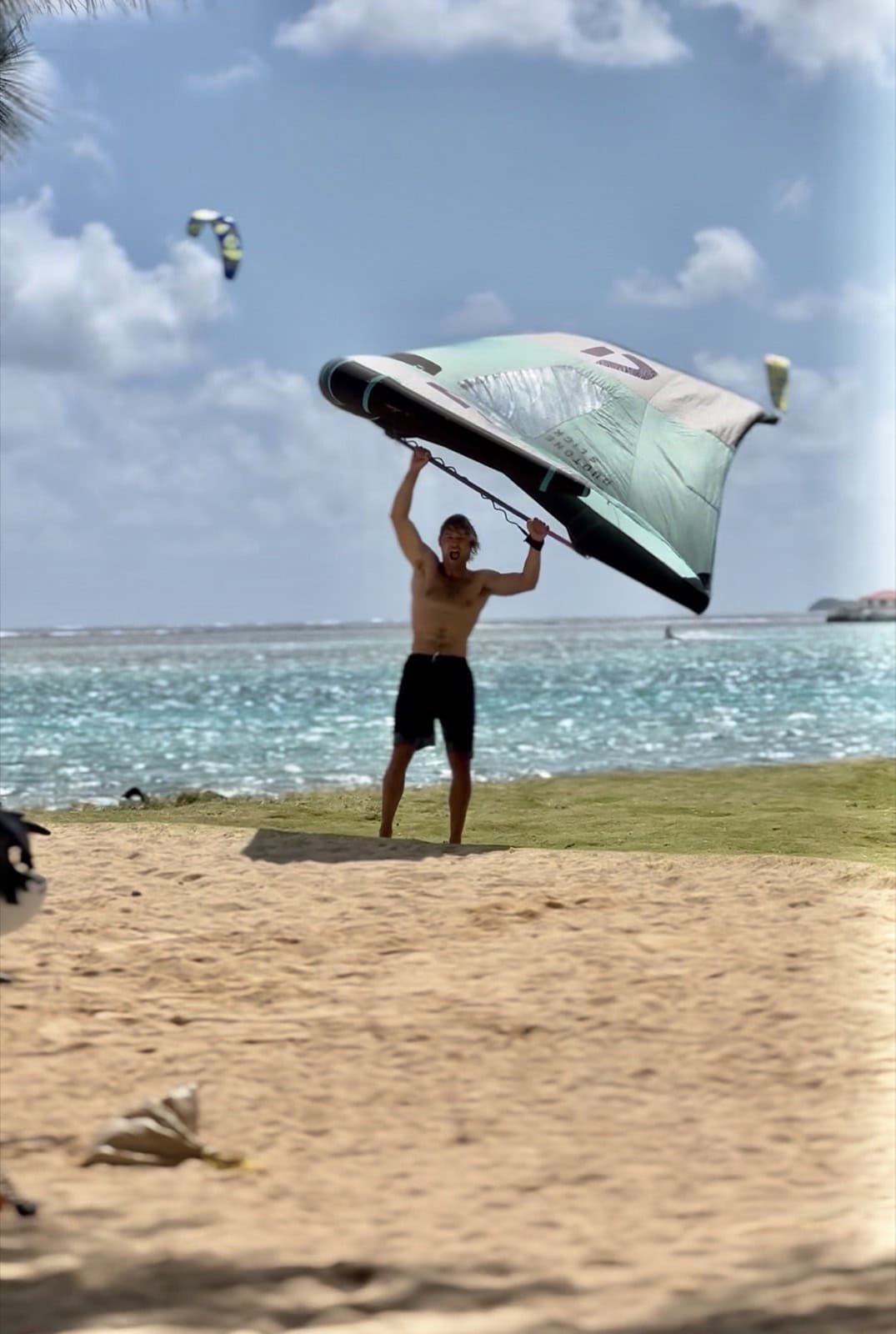
Between three to five days, with a good wing foil school, many people can start doing their first flights, ride back and forth, and become close to independent.
This does not mean you are already doing all the turns and jibes.
Learning how to turn gets more complicated. Jibes and turns usually take a lot of falls and a lot of practice.
The good thing is that jibes and turns are not necessary to start being independent.
You can put the board flat on the water, turn around, and come back the other way.
One of the good things about wing foiling compared to kitesurfing is going upwind.
Once you are up on the foil, going upwind is not very hard.
With kitesurfing, going upwind usually takes a bit longer once you are up on the board.
So yes, you can have fun on the board in one day, and it can take around three to five days to fly on the foil, ride back and forth, and become close to independent with a wing foil school.
Practicing alone can take a lot longer.
Final Answer
So, how long does it take to learn wing foiling?
You can learn to handle the wing on the beach in 15 to 30 minutes.
You can start riding back and forth on a large SUP board in the first lesson.
The hard part is learning to fly on the foil.
For many people, the first flights come after two to three two-hour lessons.
To start riding on the foil more comfortably, going back and forth, and becoming close to independent, three to five days is a realistic target with the right equipment, instructor tips, and boat support.
If you try to learn completely on your own, it can take a lot longer because you spend more time swimming, drifting, walking back, and trying to understand the foil without help.
The feeling of flying over the water is amazing.
Once your body finds the balance and learns the movement, you do not really lose it.
You may still need a lot of practice for turns and jibes, but the first real flights are what make people understand why wing foiling has become so popular.
Frequently Asked Questions
How long does it take to learn wing foiling?
Most people can start handling the wing on the beach in 15 to 30 minutes and ride on a large SUP board during the first lesson. The first flights on the foil often come after two to three two-hour lessons. Riding more comfortably and becoming close to independent usually takes around three to five days with good instruction and boat support.
Is wing foiling hard to learn?
The wing part is not very hard for most people. The foil is the hard part. Learning to balance on the foil, control the height, and manage the wing at the same time is what makes wing foiling difficult at the beginning.
Can I learn wing foiling on my own?
You can learn basic wing handling and ride on a large SUP board on your own if you have a safe location. But learning the foil alone can take much longer and can become very frustrating. A few lessons can save you a lot of time.
How many wing foil lessons do I need?
For most people, one lesson can be enough to understand the wing and ride on a large board. To get first flights on the foil, we usually suggest two to three two-hour lessons. To become close to independent, three to five days is a realistic target for many beginners.
Do I need e-foil experience before wing foiling?
No. E-foil experience can help because it teaches you the feeling of flying on a foil, but it is not required. Wing foiling is different because you also need to control the wing and create power from the wind.
Does surfing or wakeboarding help with wing foiling?
Good balance helps, but surfing, wakeboarding, and snowboarding do not teach you how to control a foil. Those sports help more with general board confidence than with the foil itself.
What equipment should a beginner use for wing foiling?
A beginner should use a large, stable wing foil board and a large beginner foil. A large front wing around 1,800 to 2,500 cm² can help a lot. Starting on a board that is too small makes the learning process much harder.
Do I need to learn jibes before I am independent?
No. Jibes and turns are not necessary at the beginning. You can put the board flat on the water, turn around, and come back the other way. Jibes come later with more practice.
Is boat support important for learning wing foiling?
Yes, boat support can make a big difference. Without a boat, you may spend a lot of time drifting downwind, swimming, and walking back with heavy equipment. A boat lets you spend more time practicing.
Plan Your Wing Foil Lessons on Union Island
Tell us your level, your travel dates, and if you have tried e-foiling, surfing, kitesurfing, or any other board sport before. We will help you choose the right wing foil lesson plan.