

Beginner kitesurfing guide
How Long Does It Take to Learn Kitesurfing?
A practical timeline for your first sessions, your first rides, and what it really takes to become close to independent.
Kitesurfing is an amazing sport and one of the most fun water sports to learn.
Before talking about how long it takes, it helps to separate two different goals. Some guests want a one-day introduction lesson just to experience kitesurfing. Others already know they want to become kitesurfers and choose a full beginner course.
One-day discovery lesson
An introduction lesson at JT Pro Center is designed as an experience. You can feel what kitesurfing is like, enjoy the water, try the first skills with an instructor, and have a fun day without committing to a three- or five-lesson course.
Think of it like a first scuba-diving experience or a first skydive: one memorable session that shows you the sport.
Full beginner course
A full course is for people who want to build the skills, safety habits and practice time needed to become real kitesurfers. If you love the discovery lesson, you can continue into this path.
This is the route for learning to ride more confidently and moving toward independence.
Short version: one day can be enough for an introduction experience. Learning to ride confidently and become close to independent usually takes several good lessons plus more practice.
Everybody is different. Some people progress very fast and can learn a lot in one day. Other people take much longer to get there. The answer depends on your ability, your coordination, the place where you learn, the quality of your instructor, and the type of kitesurfing school you choose.
Kitesurfing requires coordination between a board sport, like surfing or wakeboarding, and flying a kite with your hands. You need to learn how to control the kite, but you also need to develop balance on the board.
Any board sport or water sport experience can help. Wakeboarding, surfing, snowboarding, or anything that teaches you how to stand and balance on a board can give you an advantage. The real challenge is combining kite control and board balance at the same time.
What your first sessions are really building
The goal is not only to stand up once. A good beginner progression builds the control and judgement that make riding safer and more repeatable.
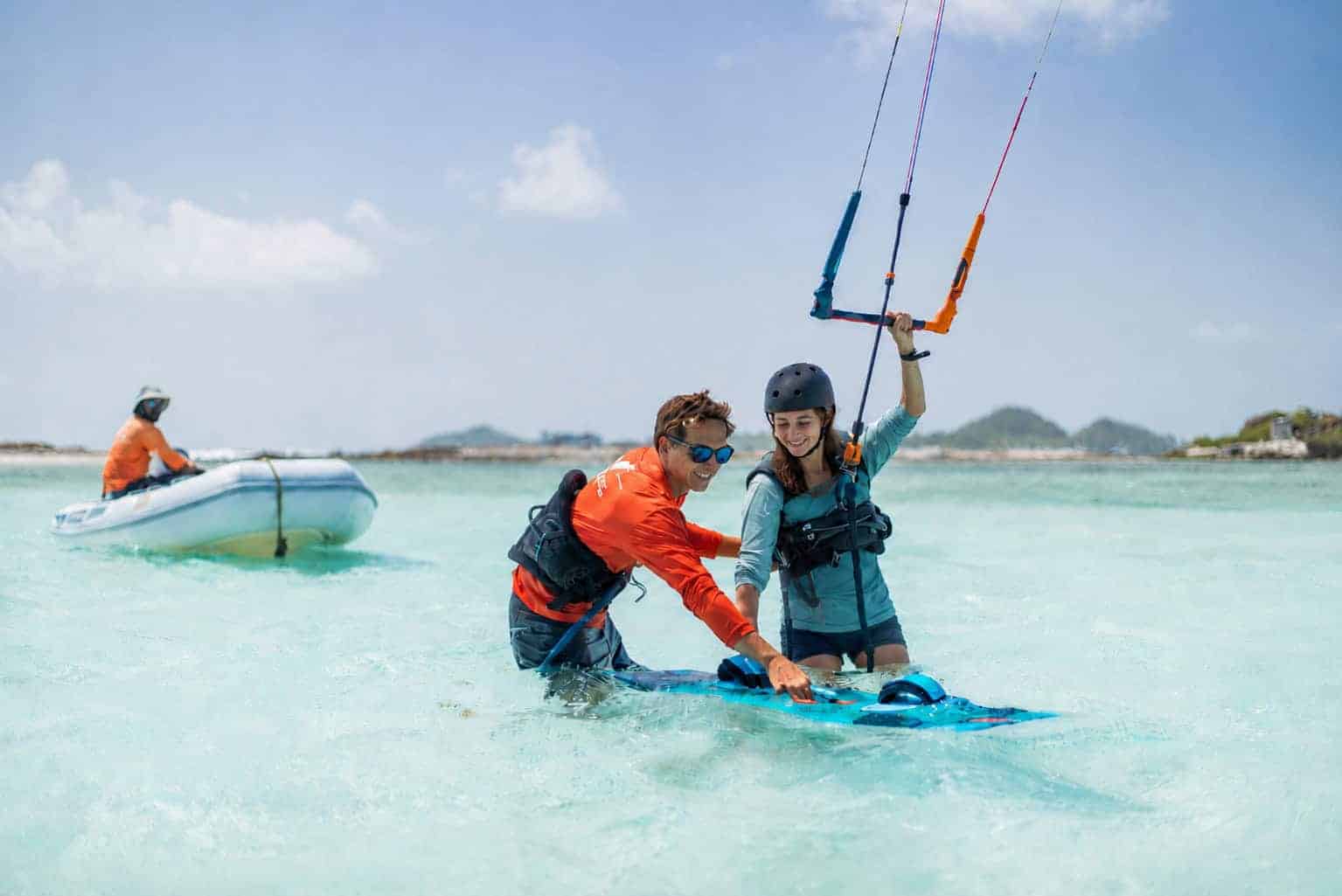
A typical first lesson progression
This compact timeline explains why progress is counted in learning milestones, not just hours. For the full skills roadmap, read our guide on how to learn kitesurfing.

Safety and setup
Learn the kite, lines, wind window and safety release before the board is introduced.
Kite control
Build smooth steering, power control and body-dragging confidence with instructor support nearby.
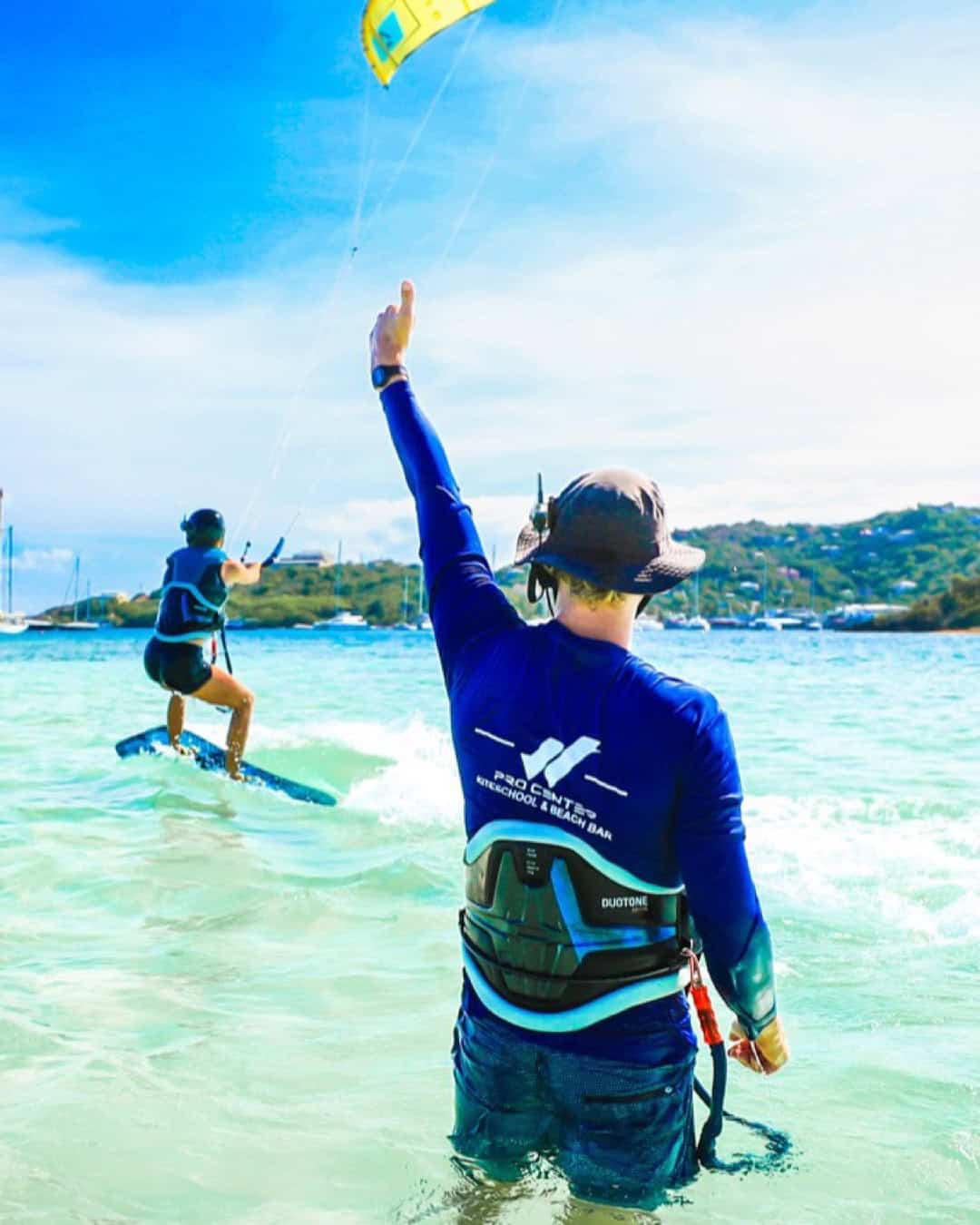
Water-start timing
Start combining kite power, board position and edging so the first rides are more repeatable.
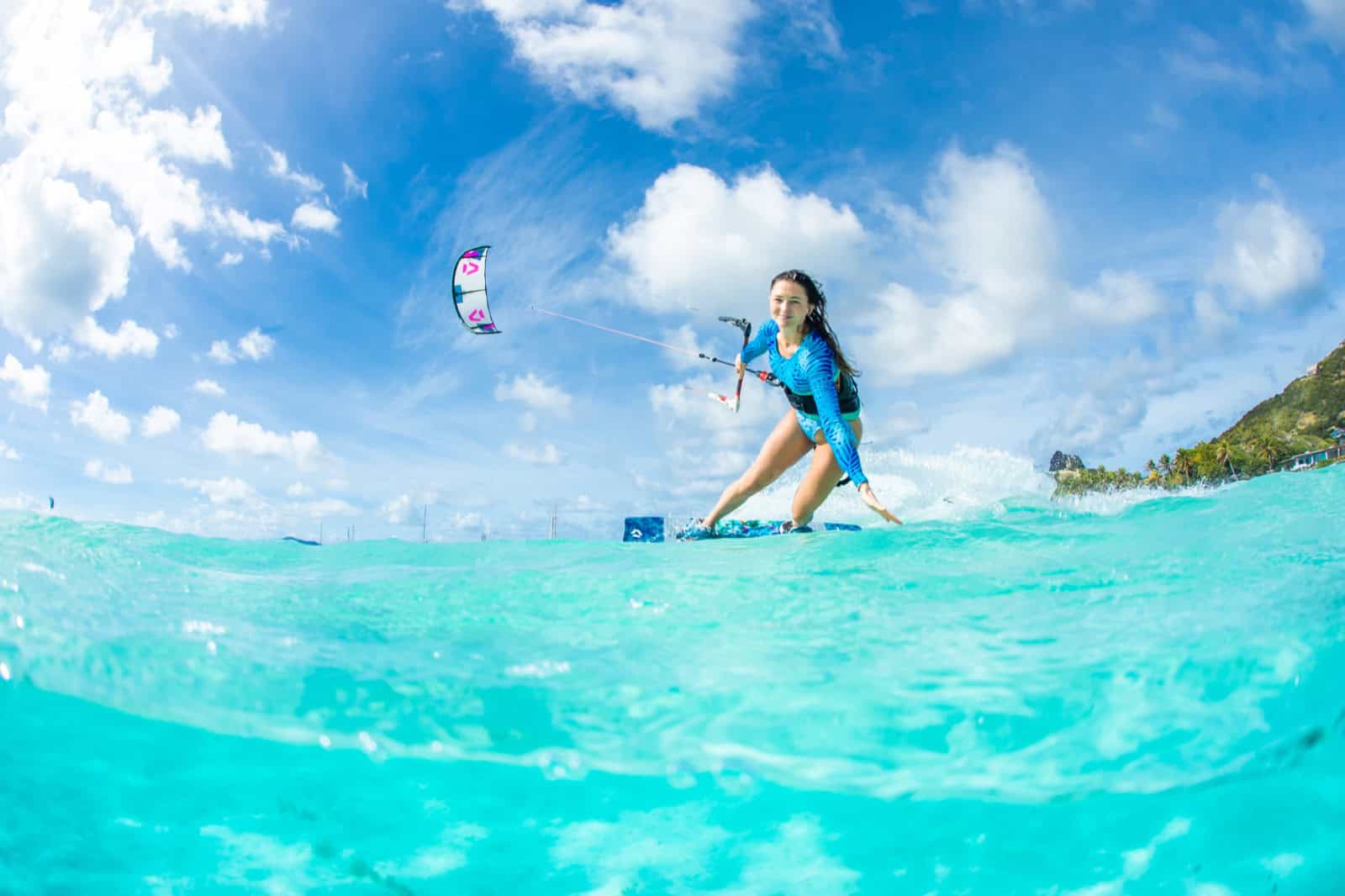
Riding practice
Use coaching, boat support and steady conditions to turn short rides into longer controlled runs.
Can You Learn Kitesurfing in One Day?
One of the great things about kitesurfing is that you can start having fun from the first hours.
At JT Pro Center, our kitesurfing school in the Caribbean, we often teach people in conditions where they can try the board during their very first lesson. From our own numbers and experience, more than two-thirds of our guests, and often more than 80%, stand up on the board and ride during their first lesson when conditions are suitable.
That estimate is based on thousands of beginner lessons at our kite center and my own 25+ years as a professional kitesurfer teaching in my kitesurf school.
So yes, you can sometimes get up and ride in two to three hours. But that does not make you an independent kitesurfer yet.
That first ride is usually a quick, exciting moment at the end of the lesson. It is a great start, but you are not ready to practice alone or ride safely on your own yet.
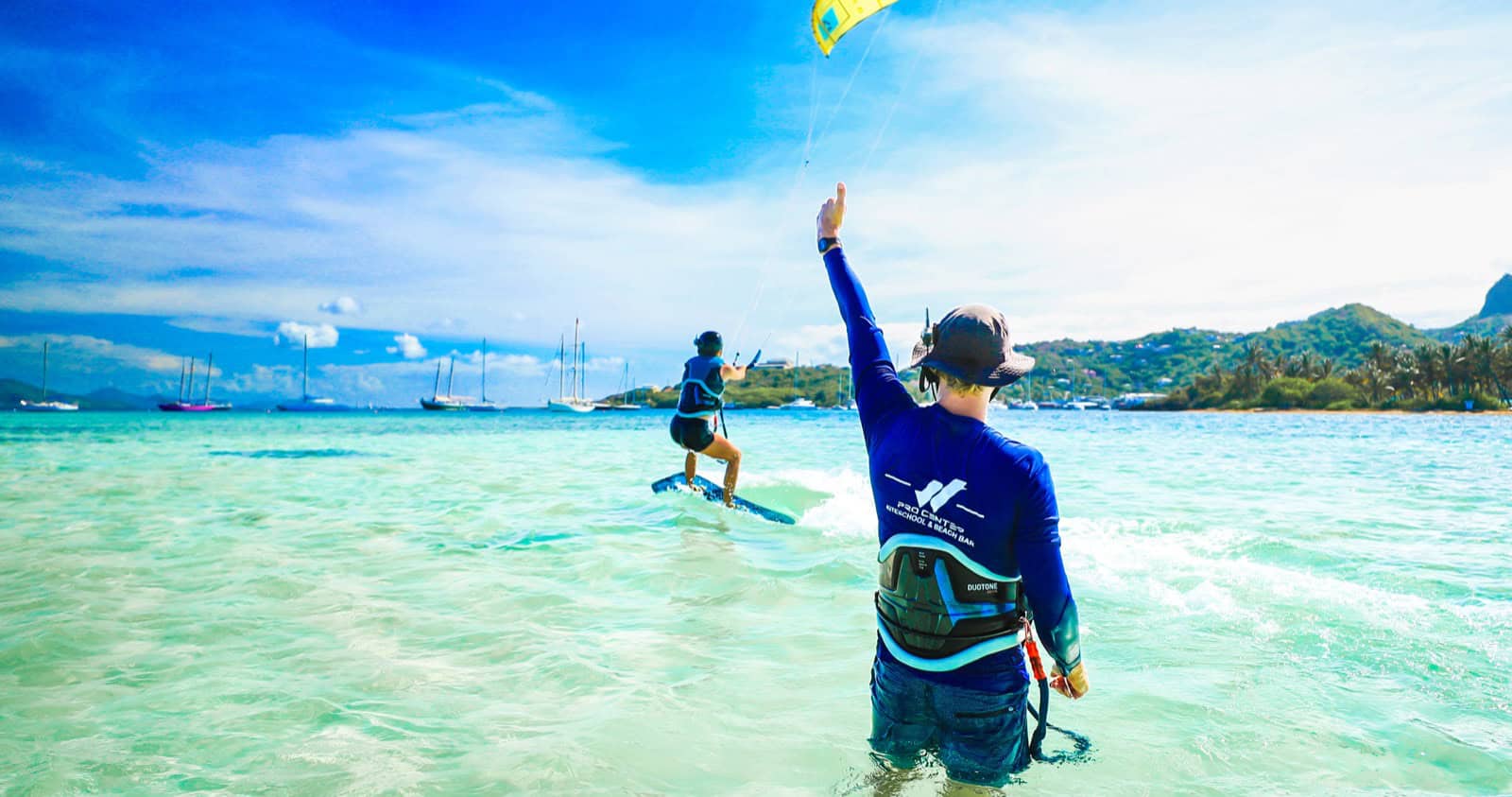
How Many Lessons Does It Take to Learn Kitesurfing?
To start having fun on the water, ride back and forth like a normal kitesurfer, and begin going upwind, which means coming back to the place you started from, most people can start reaching that level after around three lessons.
But this does not make you a fully independent kitesurfer yet. It does not mean you are ready to practice on your own without assistance, boat support, or an instructor.
To become independent, we usually recommend a minimum of five lessons.
Five lessons can often bring you close to an independent level. After that, you may still need additional lessons at your home spot to understand the local wind, launch area, safety rules, and riding conditions.
Some people can ride and look independent after only three lessons, but with only three lessons, they usually do not yet have enough experience and knowledge to be fully on their own.
Most of our students at JT Pro Center can ride both ways and start staying upwind, which means coming back to where they started, after three to four lessons. But they still benefit from boat support, radio coaching, and the instructor’s help.
Being completely on your own, with your own gear, in a different spot, can take longer.
As a general average, five lessons is a good target to reach a level where you can start having real fun and become close to independent. Some people may need ten lessons. Some people may only need three. It depends a lot on coordination, confidence, fitness, previous board sport experience, and the quality of the instruction.
But for most people, five lessons is a realistic average to start riding, understanding the sport, and having fun, with maybe a few additional lessons later when you go back to your home spot.
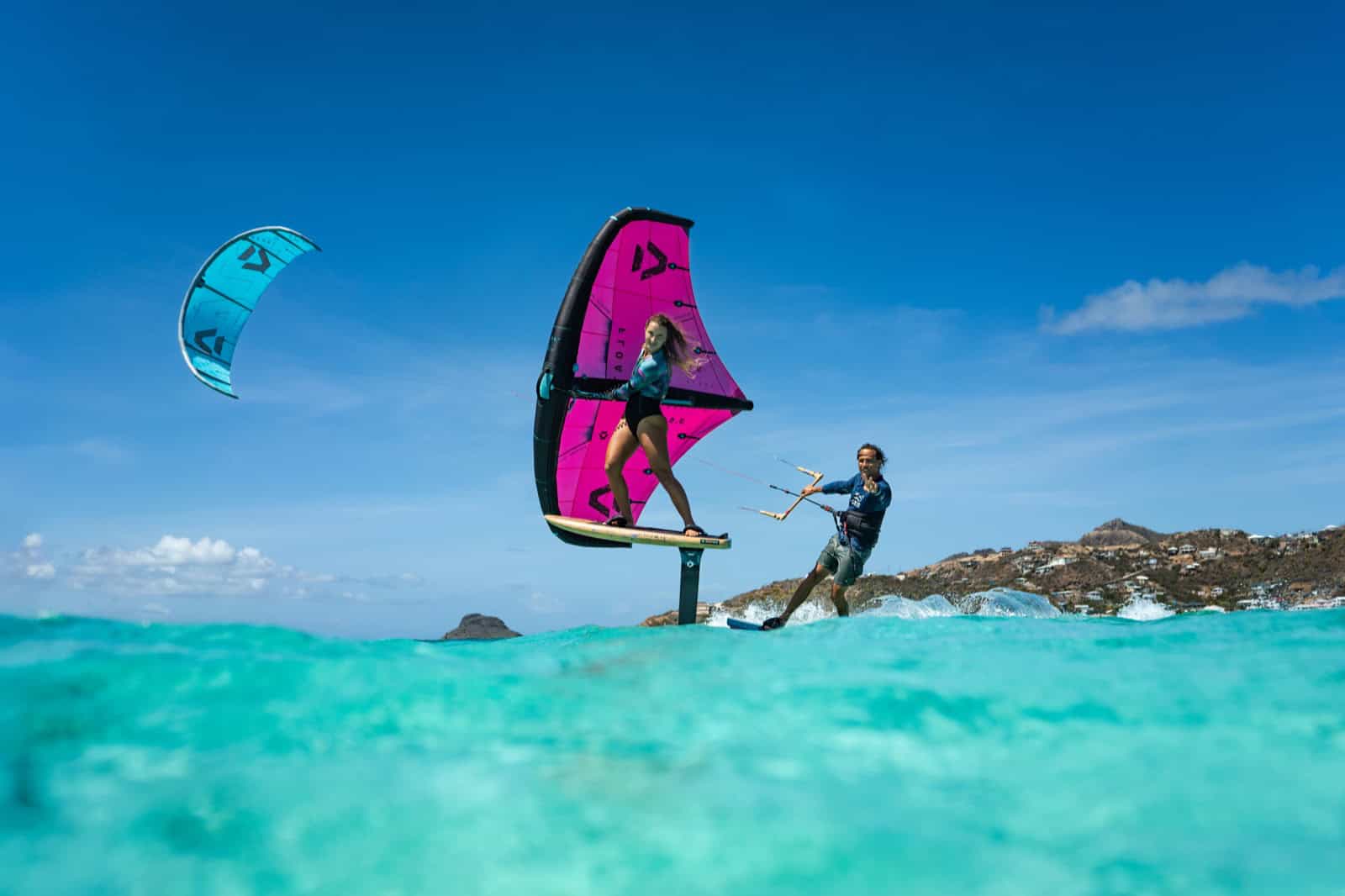
Plan your kitesurfing lessons in the Caribbean
Tell us your level, travel dates and goals. We will help you choose the right lesson plan for Union Island conditions.
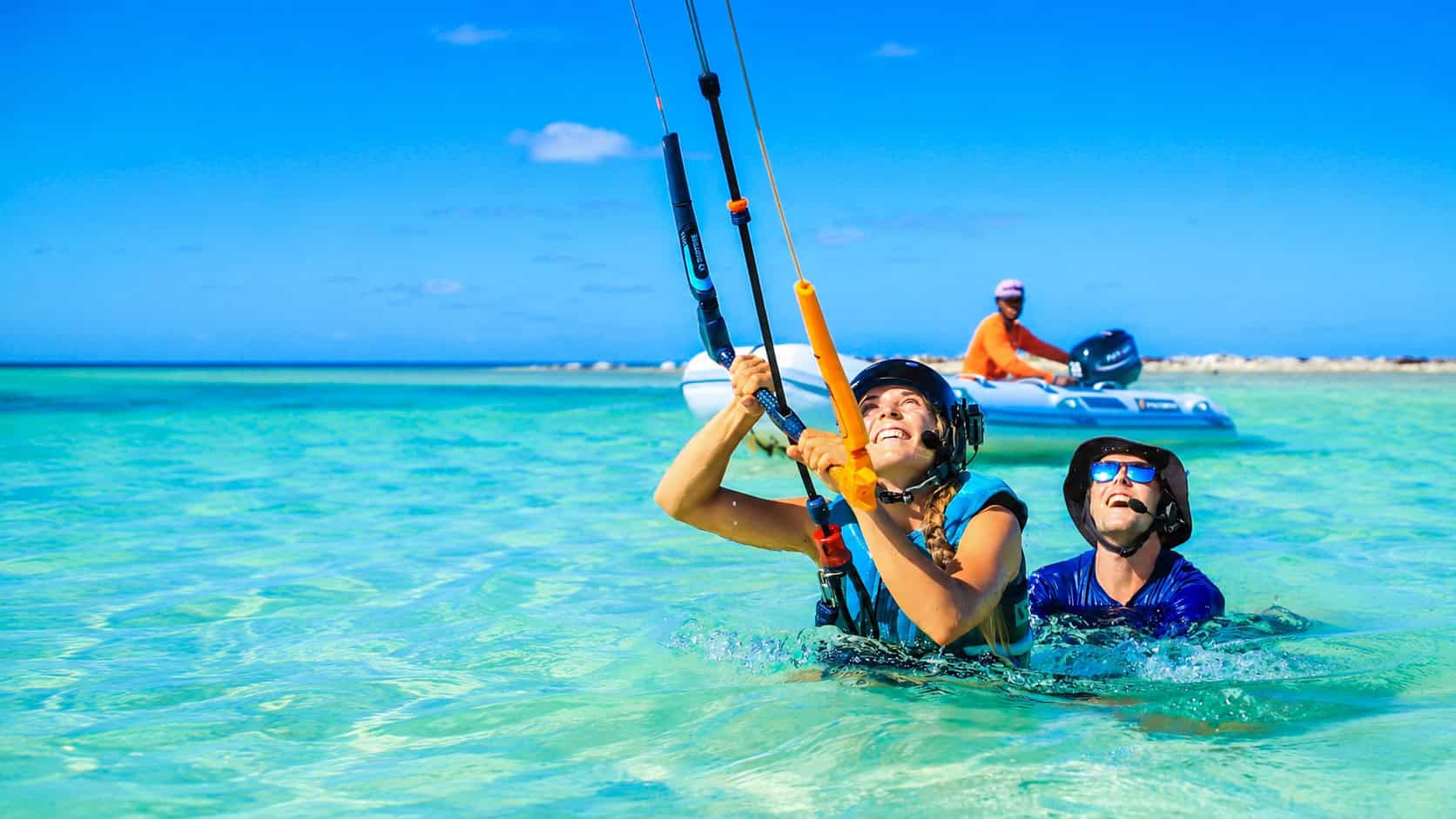
Why You Should Not Learn Kitesurfing on Your Own
Learning to kitesurf is a super fun experience, but we strongly recommend learning in a private lesson setting.
You should not try to learn kitesurfing on your own. It can be dangerous. You would not learn paragliding or skydiving by yourself, and kitesurfing should be treated the same way.
The best way to learn is with a certified kitesurfing school, ideally with private lessons, private boat support, and radio-assisted coaching.
At JT Pro Center, this lesson approach is shaped by thousands of lessons at the kite center and by my own 25+ years as a professional kitesurfer teaching beginners and progression riders.
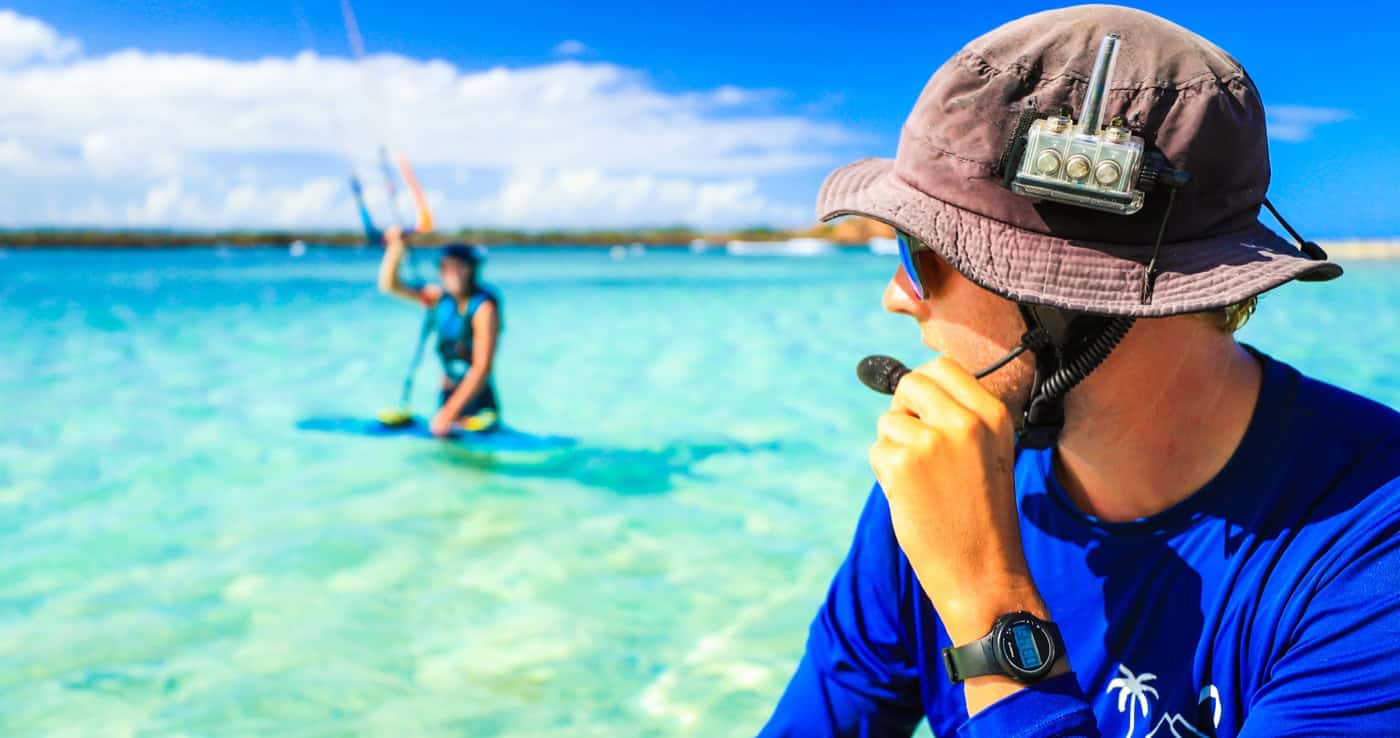
Radio-assisted lessons help you progress much faster because your instructor can correct your mistakes live while you are riding.
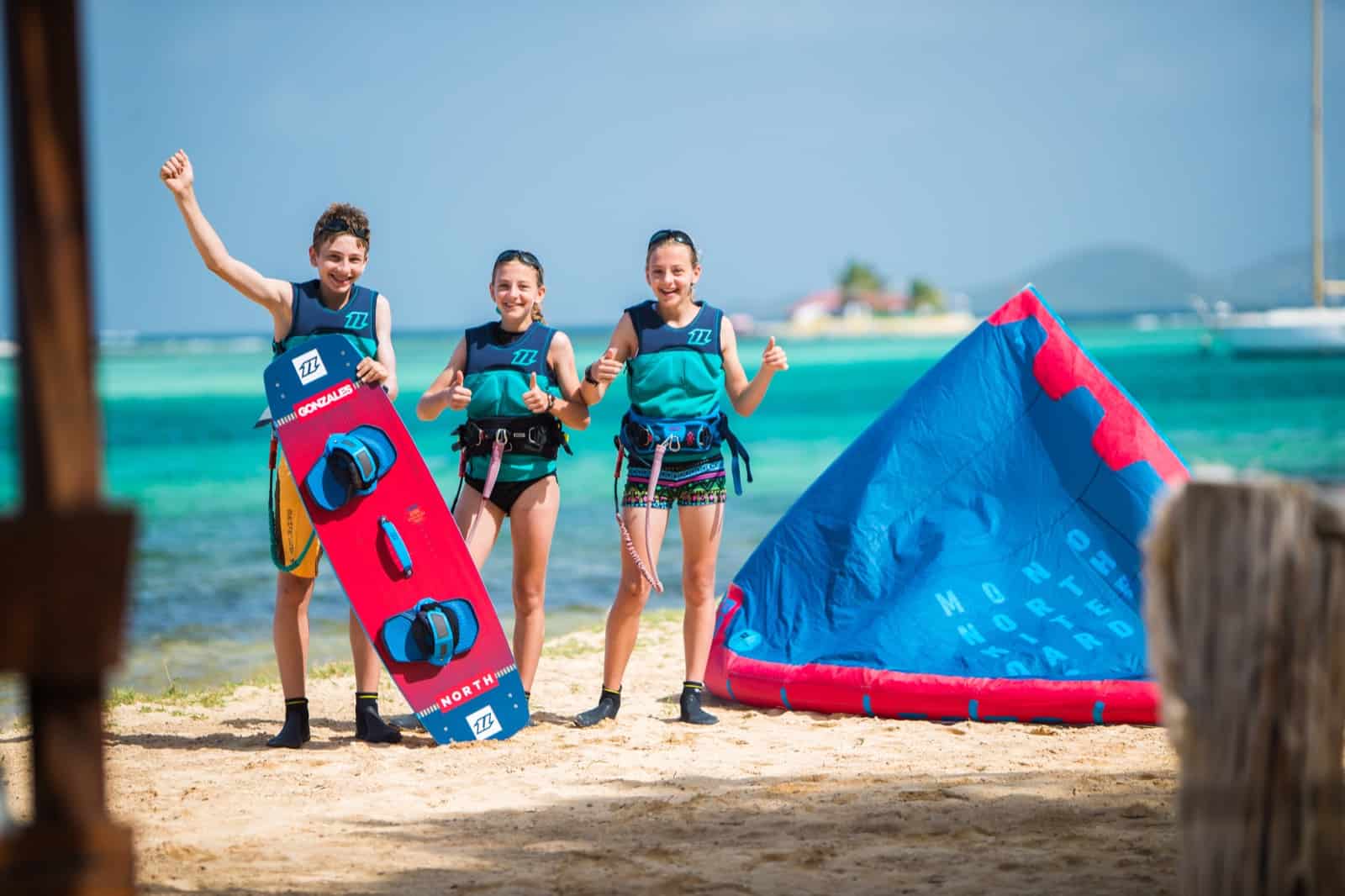
What Makes You Learn Kitesurfing Faster?
The time it takes to learn kitesurfing depends on a combination of factors:
- Your natural ability
- Your coordination
- Your confidence in the water
- Your previous board sport experience
- Your instructor’s skill
- The location where you learn
- The wind conditions
- The water conditions
- The quality of the school
- The quality of the kitesurfing gear
- Whether the lesson has radio coaching
- Whether the lesson has boat assistance
Warm water, flat water, good kitesurfing gear, radio coaching, and boat assistance all make a big difference.
Think about it this way: if you learn with a school that does not have a boat, a three-hour lesson could mean one hour of actual practice and two hours swimming, drifting, walking back, or resetting after crashes.
A bad instructor may also give you the wrong tips, which can make your progression much slower.
The same applies to radio-assisted coaching during the board lesson. Without radio support, you may keep repeating the same mistake without knowing how to fix it. You crash, and then resetting after a crash can take a long time, especially without a boat.
In some locations, a two- or three-hour lesson may only give you 20 minutes of real riding practice.
With a good school like JT Pro Center, a three-hour lesson gives you much more actual practice time because the boat support, radio coaching, and lesson structure are designed to keep you learning the whole time. That is why your progression can be much faster.
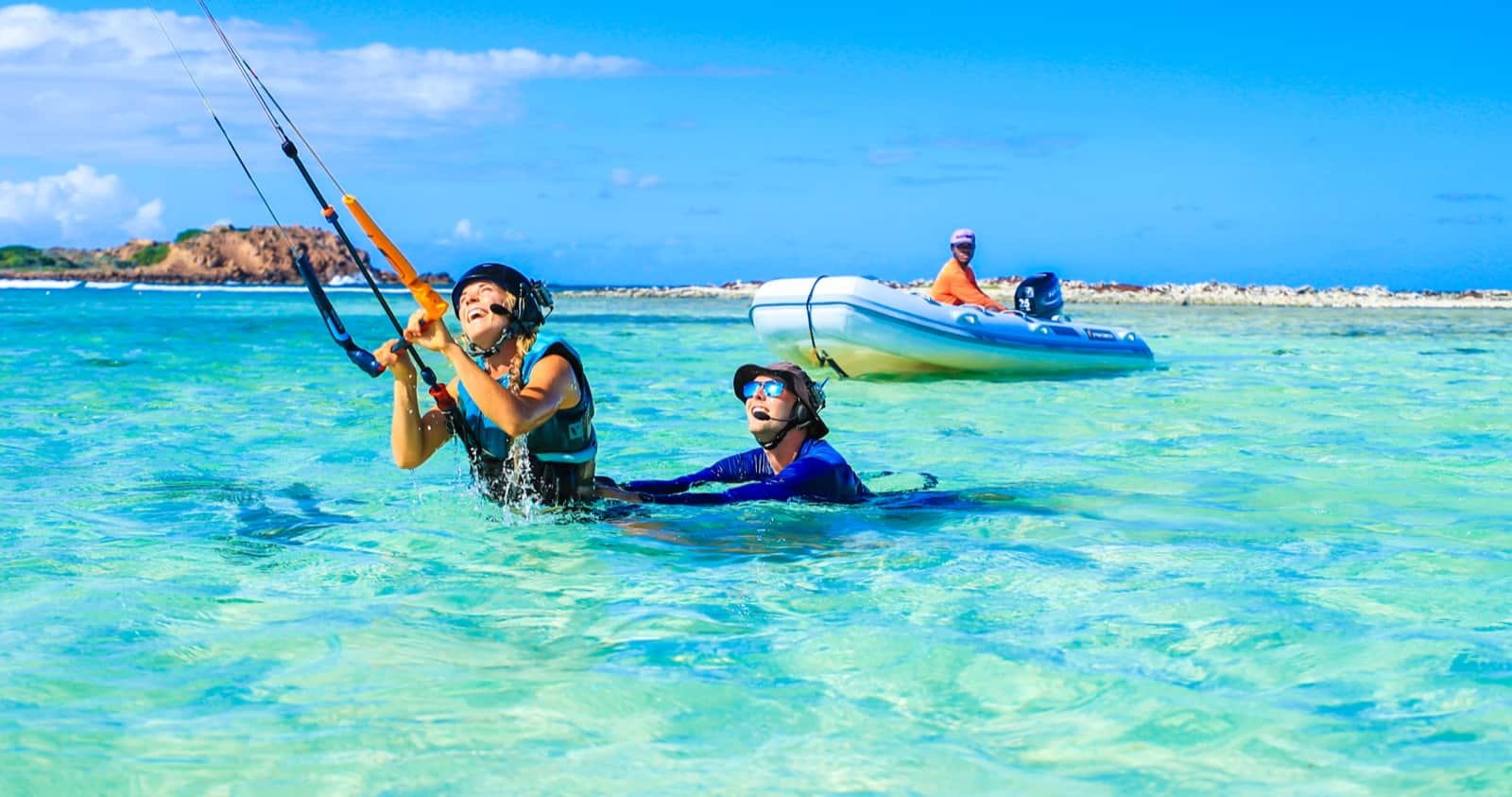
Why the Kitesurfing School You Choose Matters
The most important decision is choosing the right kitesurfing school.
If you learn in the right place, with the right instructor, the right equipment, radio coaching, and boat support, you put all the chances on your side.
From my personal experience, I have seen many people who thought they were bad at kitesurfing and said they would never do it again. But when they came to JT Pro Center here in the Grenadines, we convinced them to take another lesson.
Many realized that in one day, or even in one lesson, they learned more than they had learned in five lessons at random schools elsewhere.
That is why the quality of the school you choose has a huge impact on how fast you learn kitesurfing and how enjoyable the learning process becomes.
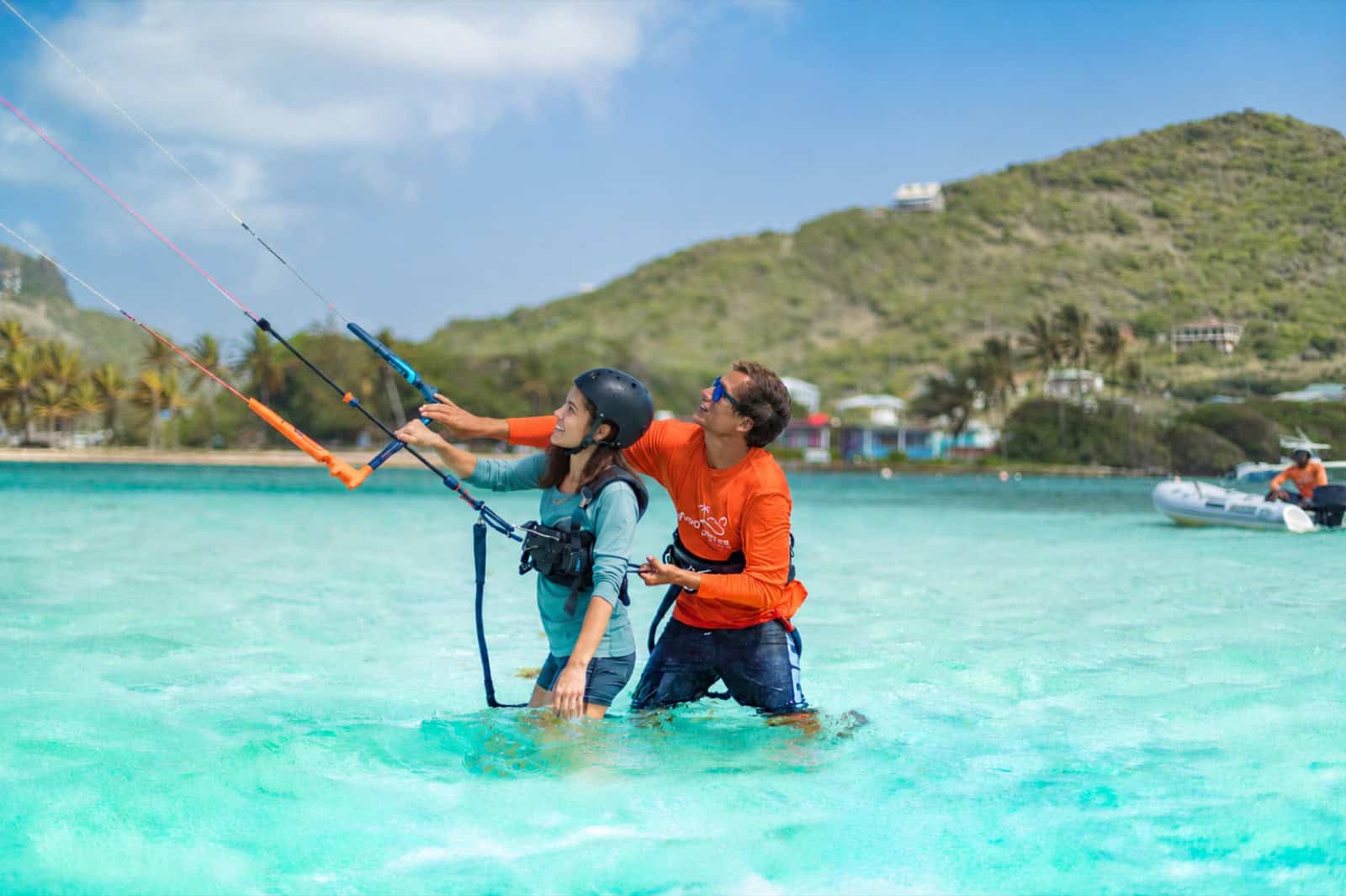
Can Everybody Learn to Kitesurf?
One important thing to remember is that almost everybody can learn.
Some people take longer because they do not naturally have good coordination. But if they keep practicing and learn in the right conditions, they will get there.
Other people progress very fast and can learn in two or three lessons.
The important thing is not to compare yourself too much with other people. Everybody learns at a different speed. What matters is learning safely, with the right support, in a place that gives you the best chance to progress.
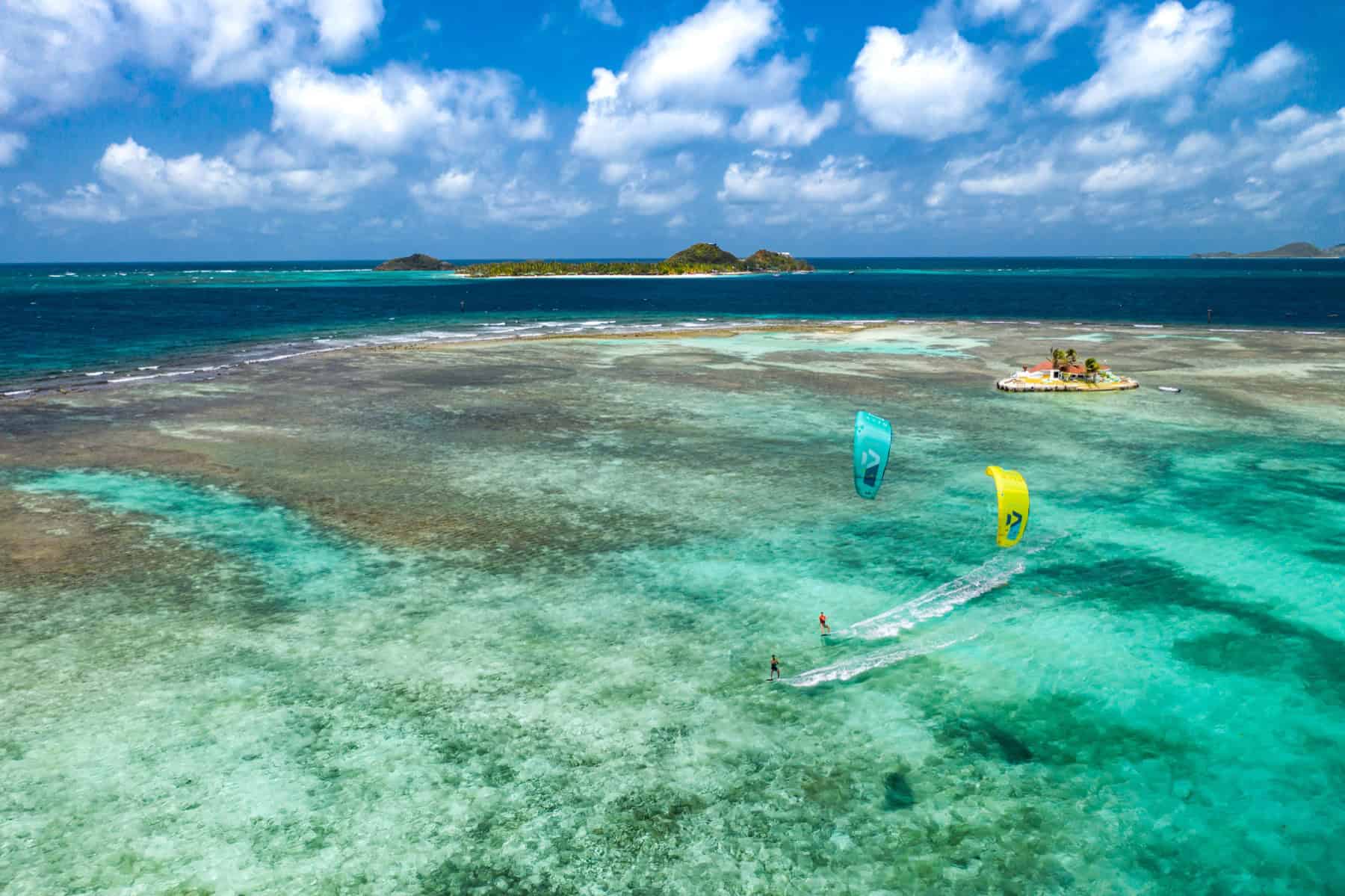
Is Learning Kitesurfing Worth It?
It is completely worth it.
Kitesurfing becomes a way of life. Once you become a kitesurfer, your life can change entirely. It is a very addictive sport, and most people who get into kitesurfing fall in love with it.
Kitesurfing is a 3D sport. You ride on the water, fly through the air, and are powered only by the wind and the strength of the kite. It is an incredible feeling.
So, how long does it take to learn kitesurfing?
You may stand up and ride during your first lesson. You may start riding both ways after three lessons. You may start going upwind after three to four lessons. And with around five good lessons, many people can get close to an independent level.
But the real answer depends on you, the conditions, and especially the school you choose.
If you want to learn faster, safer, and with more fun, choose a good kitesurfing school with private lessons, radio coaching, quality equipment, flat water, warm water, and boat support. That is what makes the biggest difference.

Can you learn during a one-week Caribbean trip?
Yes, a one-week trip can be a realistic window for focused beginner kitesurfing lessons, especially when the wind is steady and the lesson setup is private. It is still important to stay flexible. Some guests progress fast and ride early. Others need extra practice, rest days, or more time on kite control before the board starts to feel natural.
Before arriving, it helps to be comfortable in the water, sleep well, avoid arriving exhausted, and tell the school honestly about your previous board sport or water sport experience.
Beginner FAQ
Can I learn kitesurfing in 3 days?
Some beginners can stand up and start riding within a few days, especially with private lessons, boat support, and good conditions. That does not always mean they are independent yet. Many students still need more practice to ride safely on their own.
Is kitesurfing harder than wing foiling?
They are different sports. Kitesurfing requires learning kite control and board balance together. Wing foiling has a different learning curve with the wing, foil, balance, and pumping. Your background, confidence, and lesson conditions matter more than a simple harder-or-easier answer.
Do I need to be very strong?
No. Good technique matters more than strength. General fitness helps, but the kite creates the power and the harness carries much of the load when used correctly.
Do I need to be a strong swimmer?
You should be comfortable in the water and able to swim, because kitesurfing lessons happen in open-water conditions. Proper instruction, flotation, lesson structure, and support are important parts of beginner safety.
Is it safe for beginners?
Kitesurfing can be safe for beginners when it is taught in the right conditions by a qualified school with appropriate equipment, safety systems, and support. It should not be learned alone.
Plan your kitesurfing lessons in the Caribbean
Tell us your level, travel dates and goals. We will help you choose the right lesson plan for Union Island conditions.