
How to kitesurf
How to Learn Kitesurfing
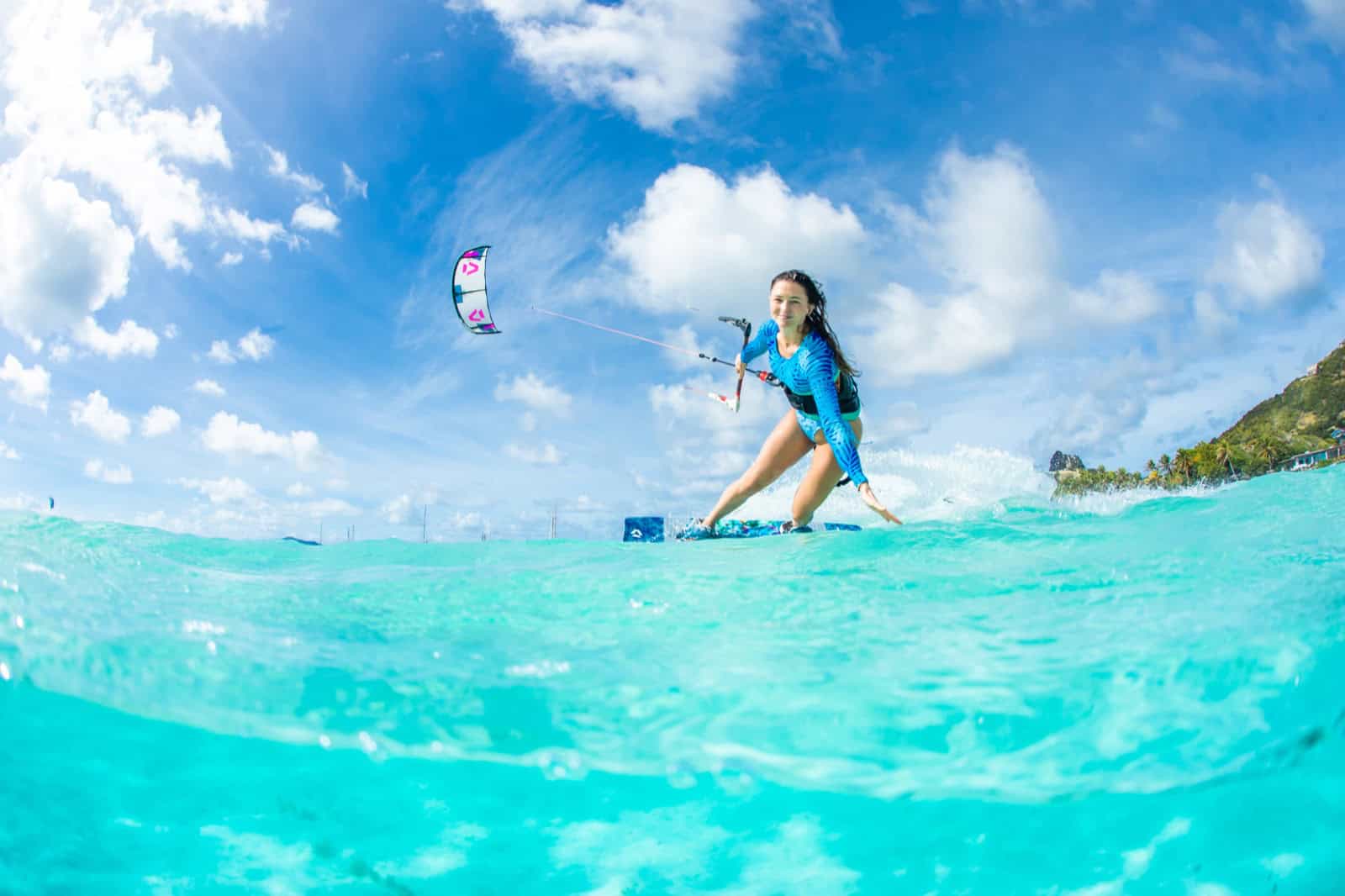
Kitesurfing is an amazing and spectacular sport, and best of all, it is accessible to anyone. It is not a dangerous sport if you follow all the basic rules. Here is everything you need to know to become a kiteboarder.
Kitesurfing is an amazing sport and easier to start than many people think when you follow the right steps. This guide explains what beginners need to know to learn how to kitesurf. If you are searching for how to kitesurf, the safest path is to learn with a qualified instructor, steady wind, the right equipment, and a beginner-friendly spot.
✓ Accessible to anyone
✓ Learn at a school, never alone
✓ Warm, safe water
✓ 3 day course to ride
Learn to kitesurf
How to kitesurf safely: three rules before you start
If you are not a kiteboarder and you saw some kiteboarding videos and ended up here, this question must be in your head. Kitesurfing is accessible to anyone, and it is not dangerous if you follow all the basic rules.
Never learn on your own
Too many accidents happen when people teach themselves, get scared, and decide the sport is too dangerous. You would not try skydiving without an instructor, it is the same for kitesurfing.
Find a warm location
Find a great location, preferably with warm water, so learning is comfortable and you can spend real time on the water.
Find a good school
Take a course at a good kitesurf school that helps you progress in a fast and safe way.
Before you book
Requirements to learn kitesurfing
- You must know how to swim.
- You should be at least 35 kg (for kids).
- You should act responsibly.
- You must learn at a kitesurfing school.
- Any other board sports will help, but are not a pre-requirement.
Ready to learn with an instructor on the water?
See how private kitesurfing lessons work on Union Island, with warm water, safety boat support and step-by-step progression.
Where to learn
Where to learn kitesurfing
If you live somewhere cold, consider flying somewhere warm and nice, taking a holiday, and bringing your partner or family along with you. Try to find a place with a great kitesurfing spot to learn, but that also offers other non-kitesurfing activities where you can take your girlfriend or boyfriend if they decide not to try out the kitesurfing lessons with you.
Learning this way will make the sport more enjoyable and turn the trip into a real holiday. The Grenadines, for example, has one of the most complete kite center setups for this type of trip, with warm water, nearby islands, boat support, and the JT Pro Center based on Union Island.
Which school
Which kitesurfing school?
Choose a kitesurfing centre that focuses on progression and safety, not on filling large group lessons. The best option is a private or semi-private lesson with a 2 students to 1 instructor ratio. You might spend a little more, but you will progress much faster than in a big group lesson, which often saves money in the end.
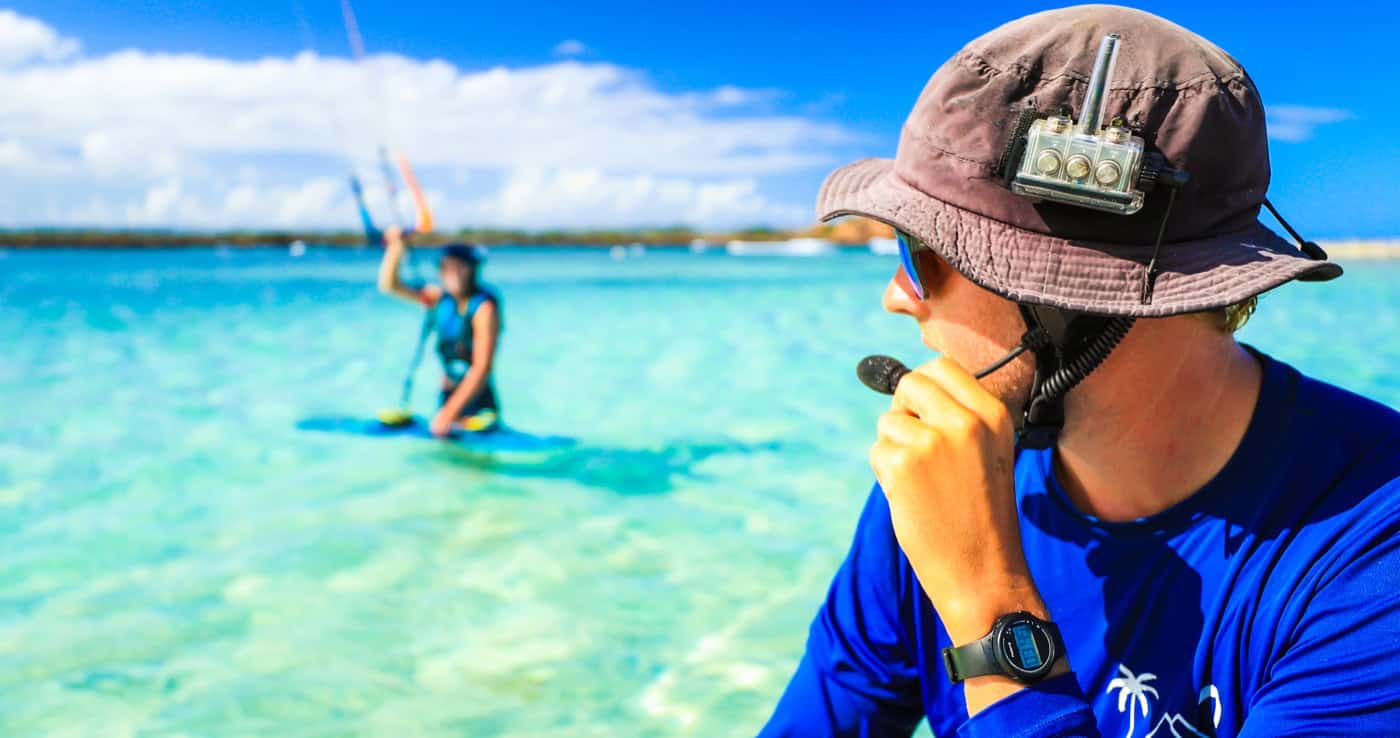
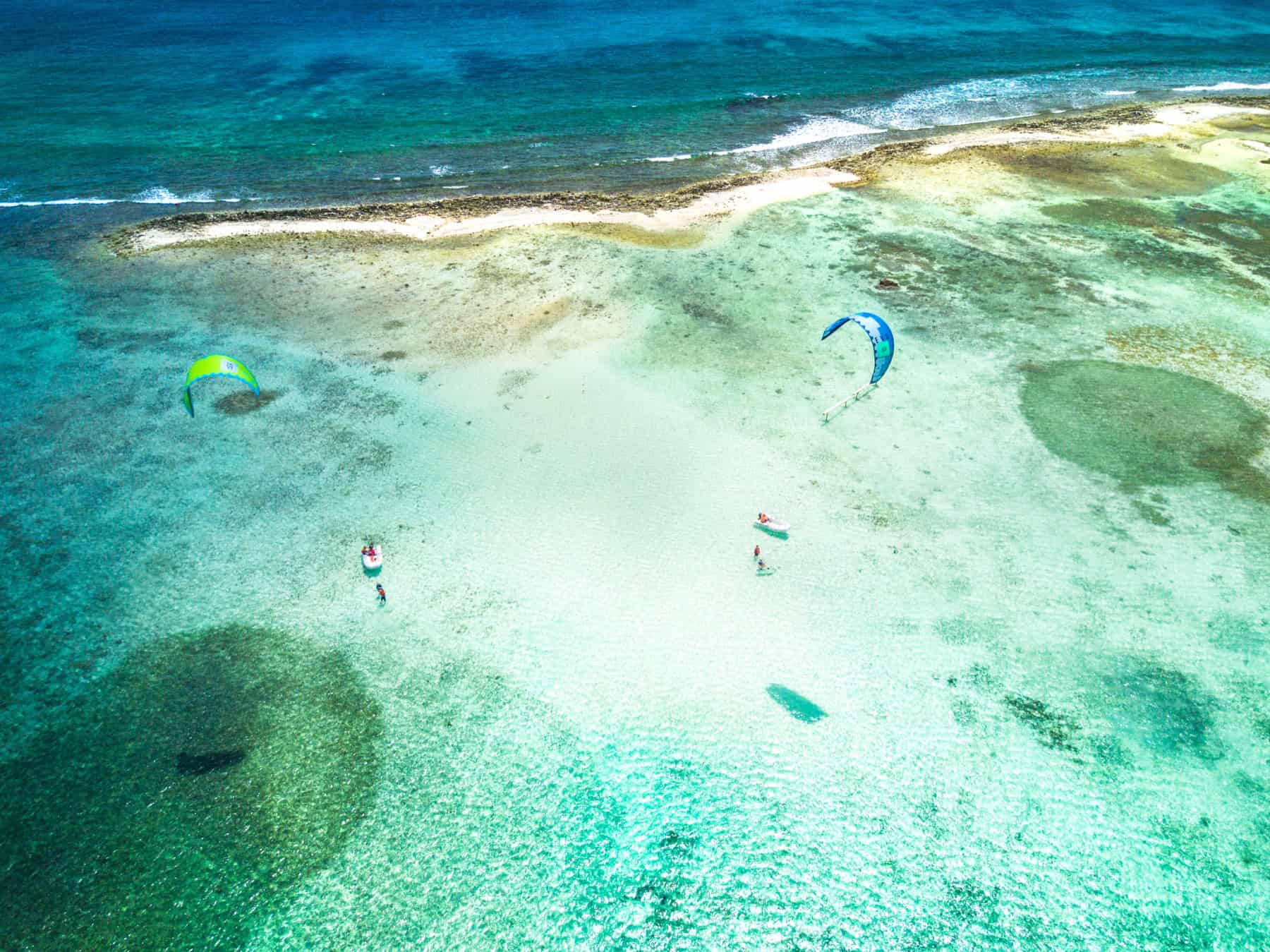
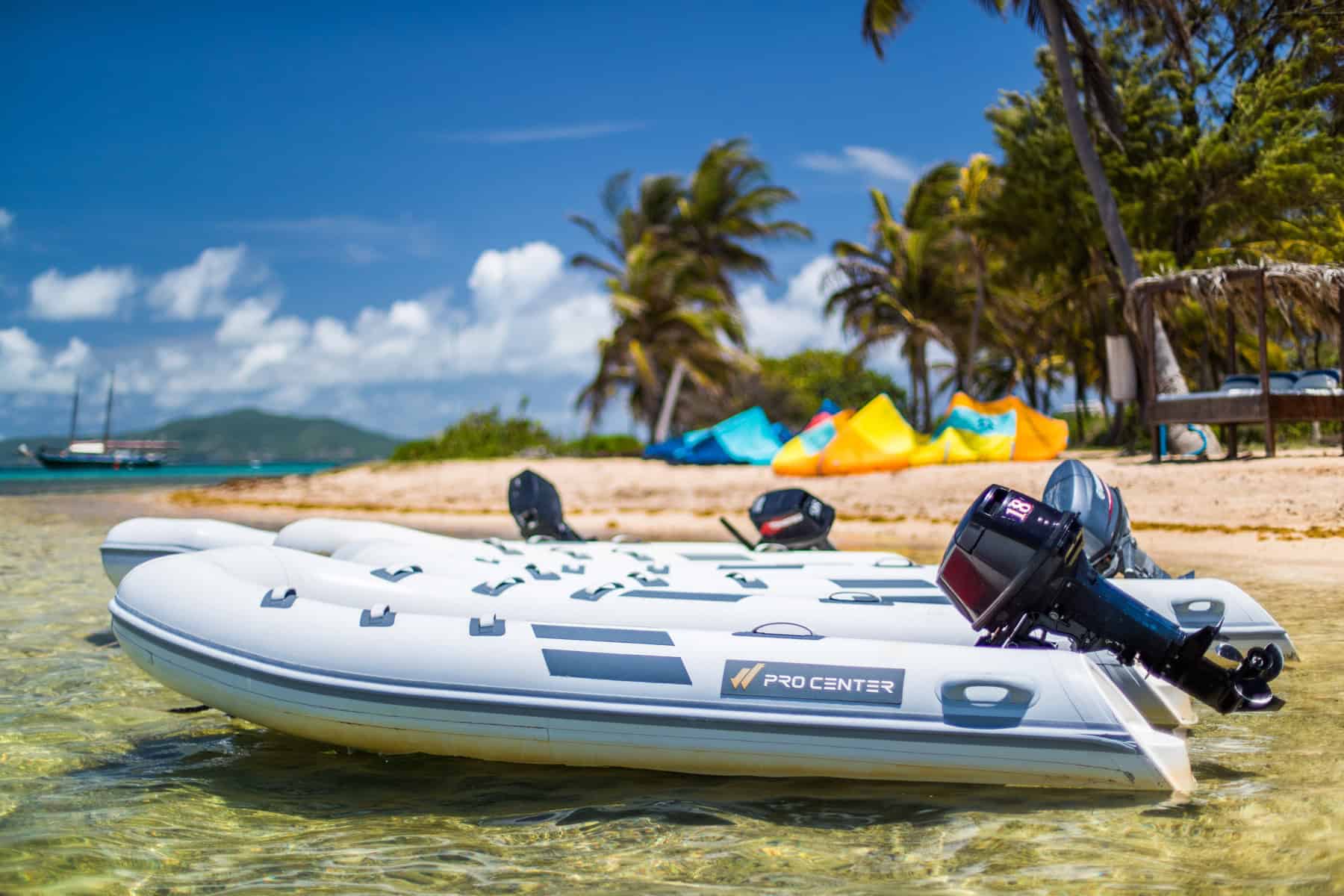
Look for a school that uses radio-assisted coaching for board lessons, so feedback comes while you are riding, not only once you stop. A good beginner school should also have a safety boat following the lesson. That boat can save you hours of swimming, keep you from drifting too far downwind, and let the instructor keep the lesson moving.
JT Pro Center on Union Island is built around that setup: private instruction, radio coaching during board work, a dedicated safety boat, and warm clear water for learning.
Plan the full learning trip, not just the lesson.
Check the best time to come, where to stay, and how to get to Union Island before booking flights.
The lesson breakdown
How a kitesurfing course works
The outline below follows JT Pro Center standards. To get riding comfortably, a three half-day package is usually the best plan. It gets you onto the board and gives you the real feeling of becoming a kiteboarder. Each lesson is 2 hours 30 minutes.
Day 1 · Discovery lesson timeline
30 to 45 min
Theory and safety briefing
- Wind and spot briefing
- Safety release practice
- Clear plan for the first ride
45 min to 1.5 hours
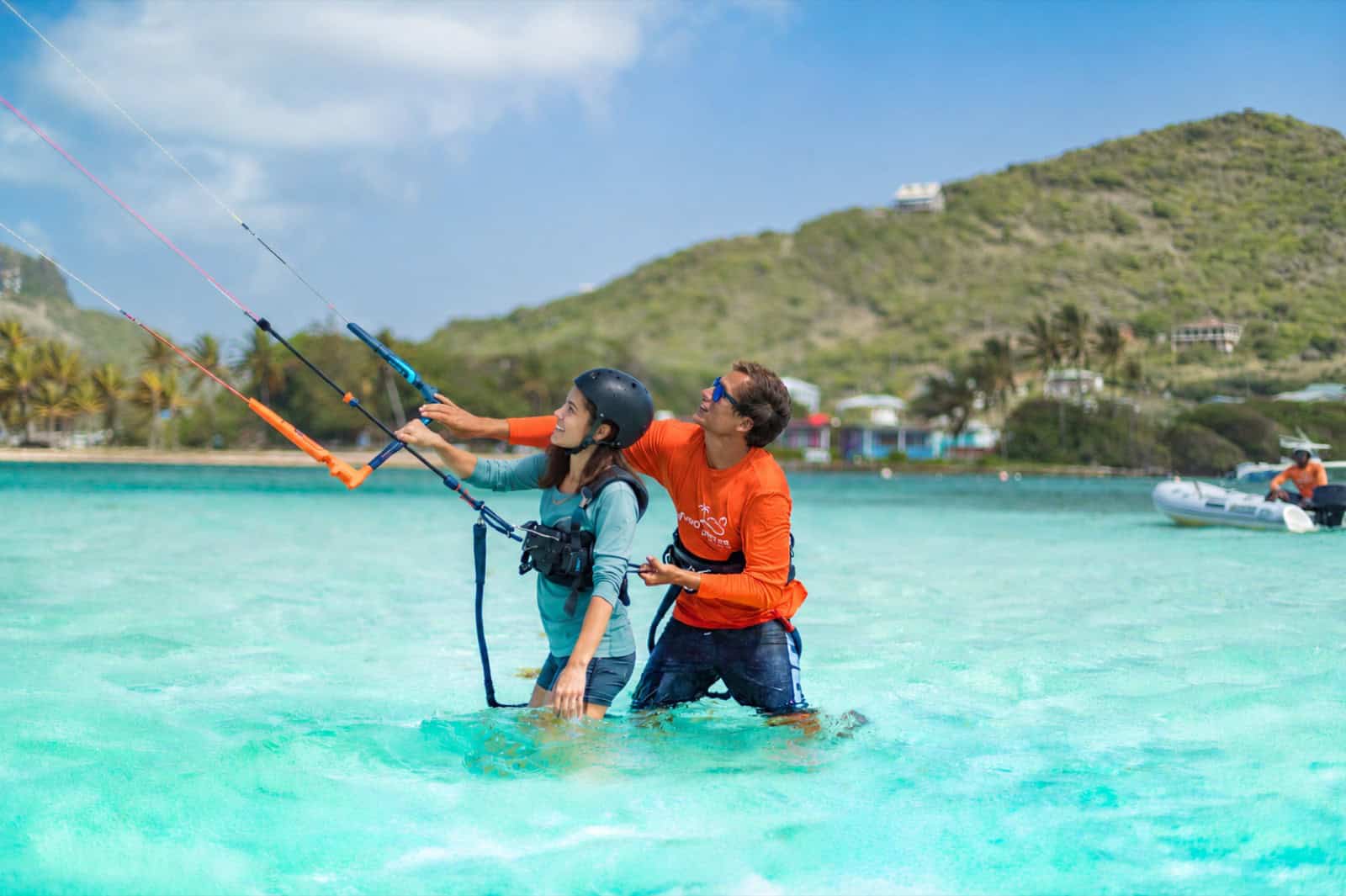
Learn to fly the kite
- Kite control
- Power and depower
- Relaunch basics
1.5 to 2 hours
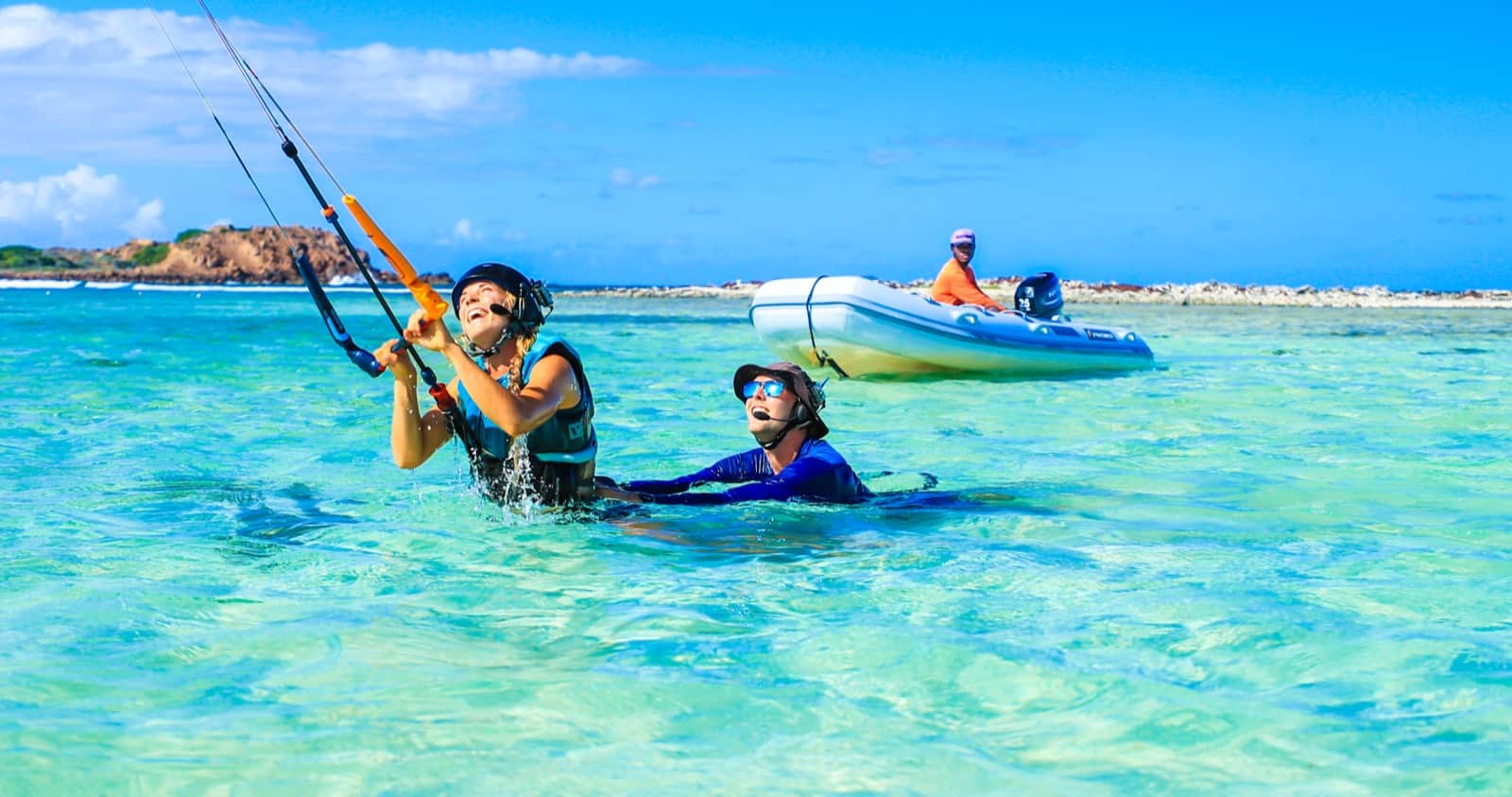
Have fun with body drag
- Controlled body drag
- Powered body drag
- Water start kite simulation
After 2.5 hours
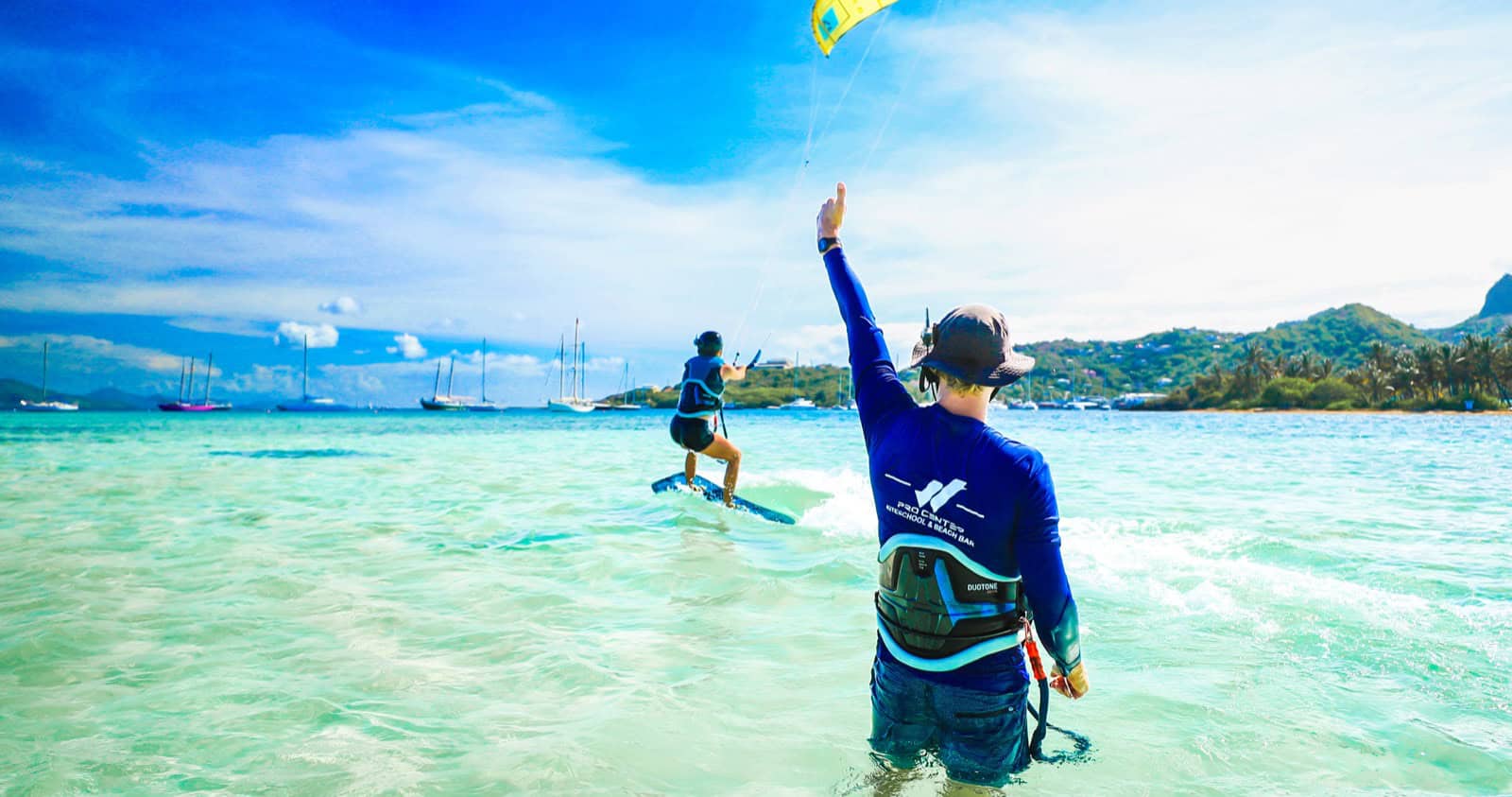
Your first water start
- Board position
- Kite dive timing
- First short rides
Day 2
30 min
More kite flying and body drag. Warm up, refresh the basics, and get comfortable with the kite again.
1 hour
Water start lesson. Work on board position, kite dive timing, and getting up with more control.
1 hour
Riding on the board. Build longer rides and start linking the feeling together.
Day 3
•
Water start improvements. Repeat starts until the timing feels easier.
•
Riding and speed control. Learn to keep the board flatter, control power, and ride longer.
•
Ride upwind. Start working toward independent riding when your level is ready.
After a 3 day course you will start to know how to kite and ride on the board. Everyone is different: some people take longer, while others can start riding long runs on the board during their first lessons. You might not be 100% ready to buy your own gear and practice on your own, so it is sometimes better to take a couple of extra lessons to make sure you are 100% confident in your riding.
The cost
How much does it cost to learn to kite?
A three day course will cost you between US$600 and US$950, depending on where you want to learn and how much boat support, private coaching, and equipment is included. It is an investment, but it is really worth it and might save you endless struggles and broken equipment you would have bought on your own.
Spending a little more on private or semi-private lessons is often the cheaper choice in the long run. With direct coaching, radio support, and a school that knows how to manage beginner progression, you can learn much faster and avoid the bad experiences that make many people give up. A weak school or oversized group lesson can easily take two or three times as many hours to reach the same stage, so the lowest hourly price is not always the best value.
On a budget?
If you are young and do not have that kind of money, start with a small 2 or 3 square meter trainer kite and play on an open field or beach with no one downwind from you. There are several videos that teach you to fly such kites, and it is time saved for when you have the cash for lessons. If kitesurfing is your dream and money is the obstacle, do not give up: there are always options to learn at lower cost, so check the low season at different kite centres, as they often offer discounts. You can also walk into a kitesurfing school and offer to work there during a summer job, in exchange for learning to kite.
After your first holiday
What is next?
Depending on how fast you learnt during your holiday and how many lessons you took, you might want to hold on before buying your own gear. It is sometimes better to stick to a kite centre back home where you create links and meet people and instructors who advise you on what is best.
For a next holiday, most riders should choose another kitesurfing centre, explain their level, take a couple of catch up lessons, rent gear, and check if supervision is available. You might also want to choose an easy kitesurfing spot where you can practice on your own, along a bay where you can walk back to your starting point if you are not riding upwind comfortably yet.
If you already took lessons before, come visit the JT Pro Center for additional coaching, catch-up lessons, and warm-water riding time, then book a room near the kite spot to turn it into a full kite holiday.
Your own gear
Buy your own kitesurfing equipment
Once you are comfortable riding upwind, it is time to get your own gear. Depending on where you live and your budget, you might need one or two kite sizes, one bar, one board and one harness.
- A brand new kite and bar for around US$1900.
- A brand new board from the current year for around US$900.
- A harness for around US$150 to 200.
Discounted gear
You can easily find brand new kites and boards from the year before, or two years ago, for half that price, which is usually the better option on a budget. Be careful with kites on eBay or second hand gear, as they are often damaged, which could mean you spend more time fixing them than using them.
Ready to ride
You are ready to book your kitesurfing holiday
You now have the main information needed to book your flight to Union Island in the Grenadines. Have a look at the getting here page, visit the Villa Mer et Sel page, and contact JT Pro Center to plan lessons and accommodation near the kite spot.
Lessons
Book your kite lesson
The JT Pro Center instructor team can help you start kitesurfing on Union Island with private lessons, warm water, radio coaching, and safety boat support. Learn about the beginner packages.
Stay
Stay near the kite spot
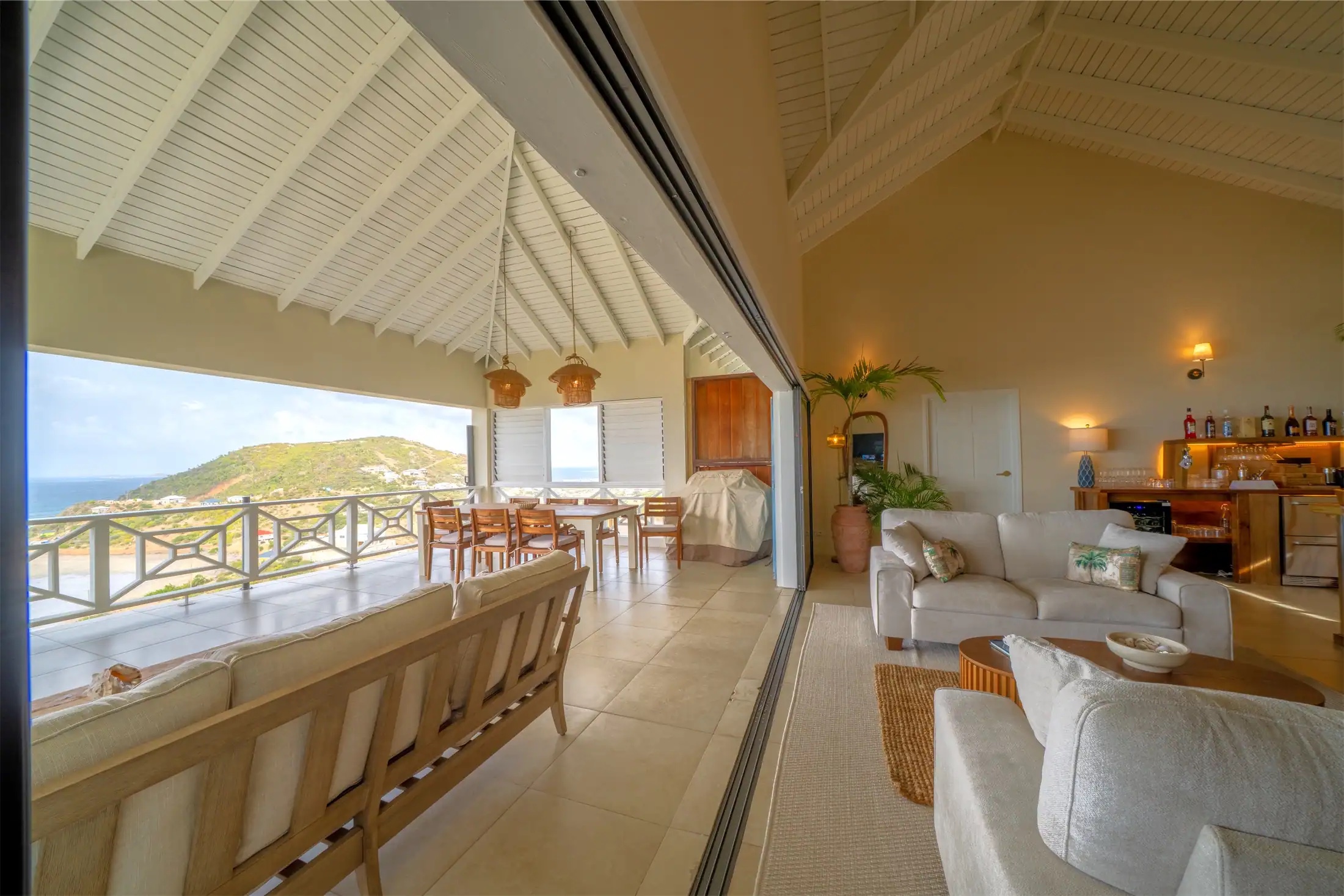
If you are planning a kitesurfing holiday, Villa Mer et Sel and the suites offer a comfortable accommodation option near the kite spot, with easy access to lessons and the island.
Good to know
Frequently asked questions
How long does it take to learn kitesurfing?
+
Most beginners need several lessons over a few days to start riding properly. Some students get their first short rides during the first lesson, while others need more time depending on confidence, coordination, wind, and previous board sport experience. For a more detailed timeline by milestone, read how long does it take to learn kitesurfing.
Can I learn kitesurfing by myself?
+
No. Kitesurfing should be learned with a qualified instructor. Trying to learn alone is unsafe and usually creates bad habits.
Are private kitesurfing lessons better than group lessons?
+
Private or very small-group lessons are usually better because the instructor can correct you faster, adapt to your level, and help you progress without wasting time.
Why is boat support useful for beginners?
+
Boat support helps with safety, board recovery, repositioning, and keeping the lesson moving. It reduces wasted time and gives beginners a better learning experience.
Where is a good place to learn kitesurfing in the Caribbean?
+
Union Island in the Grenadines is a strong place to learn because of warm water, steady trade winds, beautiful kite spots, private lessons, radio coaching, and boat-supported teaching.
Learn to kitesurf the fast, safe way
Come and learn in the warm, crystal clear, knee deep water of Union Island with certified instructors and a private safety boat for every lesson.